
[]
Home response.text()) .then(data => new DOMParser().parseFromString(data, “text/html”)) .then(dom => dom.querySelector(“div.uos-sitemap”)) .then(sitemap => getBreadcrumbsFromSitemap(sitemap)) .catch(() => getBreadcrumbsFromPath()) .then(breadcrumbs => buildBreadcrumbsHtml(breadcrumbs)) function findElementToStartFrom(sitemap) { let element = sitemap.querySelector(“a[href='” + windowPath + “?’]”) || sitemap.querySelector(“a[href='” + windowPath + “‘]”) if (element) { return element } let pathParts = windowPath.split(“/”).filter(part => part !== ”) for(let i = pathParts.length; i >=1 ; i–) { let path = (‘/’ + pathParts.slice(0, i).join(‘/’)) let element = sitemap.querySelector(“a[href='” + path + “‘]”) || sitemap.querySelector(“a[href='” + path + “/index.page’]”) || sitemap.querySelector(“a[href='” + path + “?’]”) || sitemap.querySelector(“a[href='” + path + “/index.page?’]”) if (element) { return element } } throw new Error(“Can’t find starting element in sitemap”) } function getBreadcrumbsFromSitemap(sitemap) { let breadcrumbs = [] let element = findElementToStartFrom(sitemap); while (element) { breadcrumbs.push(makeBreadcrumb((new URL(element.href)).pathname, element.innerText.trim())) element = getParentLink(element) } let homeTitle = sitemap.querySelector(“h2”).innerText.trim() let homeUrl = sitemap.querySelector(“a”).href.trim() breadcrumbs.push(makeBreadcrumb((new URL(homeUrl).pathname), homeTitle)) return breadcrumbs.reverse() } function getBreadcrumbsFromPath() { console.log(“Building breadcrumbs from path”) let breadcrumbs = [] let pathParts = windowPath.split(“/”).filter(part => part !== ”) for(let i = 1; i char.toUpperCase()) breadcrumbs.push(makeBreadcrumb(url, title)) } return breadcrumbs } function makeBreadcrumb(url, name) { return {href: url.trim(), name: name.trim()} } function buildBreadcrumbsHtml(breadcrumbs) { let rootElement = document.querySelector(“#BreadcrumbListNavElem”) breadcrumbs.forEach(crumb => { if (crumb.href === windowPath) { return } let rootDiv = document.createElement(“div”) rootDiv.setAttribute(“typeof”, “ListItem”) rootDiv.setAttribute(“property”, “itemListElement”) rootDiv.setAttribute(“class”, “uos-breadcrumb-child”) let link = document.createElement(“a”) link.href = crumb.href link.setAttribute(“title”, crumb.name) link.setAttribute(“typeOf”, “WebPage”) link.setAttribute(“property”, “item”) let titleSpan = document.createElement(“span”) titleSpan.innerText = crumb.name rootDiv.appendChild(link) link.appendChild(titleSpan) rootElement.innerHTML += “>” rootElement.appendChild(rootDiv) }) } function getParentLink(element) { while (element.tagName !== “UL”) { element = element.parentElement if (!element) { return null } } return Array.from(element.parentElement.children).find(item => item.tagName === “A”) } ]]>
Published: 17 July 2023
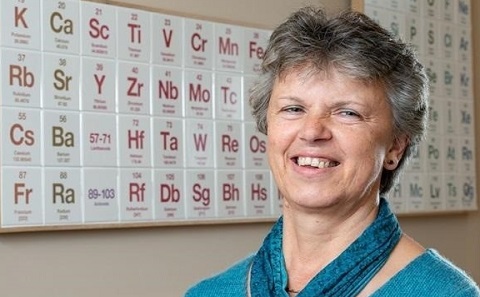
We are delighted to announce that our very own Professor Gill Reid , a distinguished Professor of Inorganic Chemistry and the current President of the Royal Society of Chemistry (2022-24), has been elected as a Fellow of the European Academy of Sciences (Chemistry Division).
Professor Reid’s election to this prestigious position is a testament to her exceptional contributions and accomplishments in the field of chemistry. With a strong emphasis on education and inspiring young individuals to engage with science and chemistry, she has continuously fostered a passion for learning and discovery among students and the wider community.
At the forefront of her research endeavors is the development of new coordination chemistry, spanning the s-, p-, d-, and f-block ions. Her expertise encompasses the creation of tailored precursors for semiconductor thin film deposition, essential for various device applications using both chemical vapor deposition and electrodeposition techniques. Additionally, she explores the application of metal macrocyclic scaffolds with a high affinity for fluoride, contributing to the advancement of next-generation medical imaging agents, particularly those utilising the positron-emitting fluorine-18 isotope.
Collaboration lies at the heart of Professor Reid’s scientific pursuits, as she actively seeks partnerships with researchers from diverse disciplines and industry. Her extensive publication record showcases the breadth and depth of her work, and she has had the honour of supervising and mentoring numerous postdoctoral researchers, nurturing their careers in the field.
In recognition of her outstanding contributions, Professor Reid was elected as a Fellow of the Royal Society of Chemistry in 2012. More recently, in 2022, she was honoured with a fellowship in the Royal Society of Edinburgh . Moreover, her significant achievements were acknowledged with the prestigious IUPAC Distinguished Women in Chemistry & Chemical Engineering award in 2023 .
The election of Professor Gill Reid as a Fellow of the European Academy of Sciences (Chemistry Division) underscores her remarkable expertise, leadership, and dedication to advancing the field of chemistry.
We extend our warmest congratulations to Professor Reid on this well-deserved honour and eagerly anticipate her continued contributions to the scientific community.