
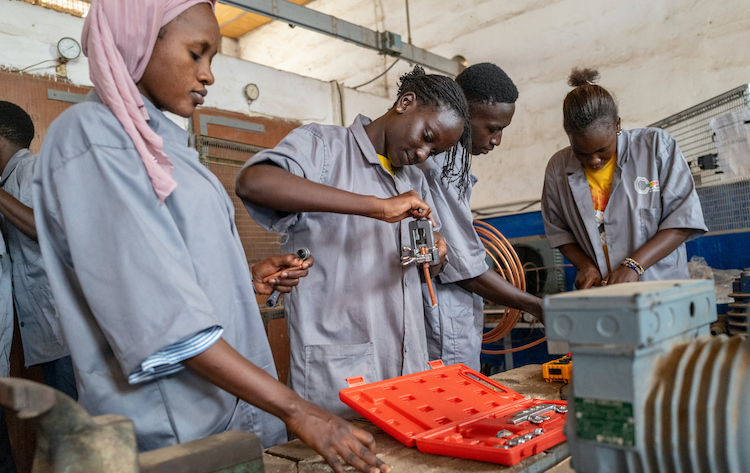

The Federal Government’s decision to reposition Nigeria’s polytechnics around technical and practical education has generated questions among students, parents and prospective applicants, particularly over the future of programmes such as Accounting, Business Administration and Mass Communication.
However, the National Orientation Agency (NOA) has clarified that the recent announcement should not be interpreted as an immediate cancellation of particular courses. Rather, the government’s plan is to gradually move polytechnic education towards its original technical purpose, with stronger attention to engineering, applied sciences, technology, innovation and practical skills.
For students already enrolled in non-technical programmes, this means there is currently no directive asking them to abandon their studies. The bigger change is expected to affect how polytechnics structure their programmes, develop curricula and determine the courses they offer in the years ahead.
At the centre of the reform is the Federal Government’s desire to make polytechnics more focused on technical education and practical training. The government believes these institutions should produce graduates who can apply what they have learnt to real problems rather than simply obtain certificates.
The NOA explained that the announcement did not contain a specific list of programmes that had been banned or immediately withdrawn. This distinction is important because some of the reactions to the policy suggested that students studying courses such as Accounting, Business Administration and Mass Communication had been ordered to discontinue their programmes.
That is not what the announcement said. Instead, the reform is expected to happen gradually as the government and relevant education authorities review the role of polytechnics and the programmes offered by them. Consequently, students should not make sudden decisions about their education based solely on social media reports or interpretations of the policy.
The government is seeking a stronger connection between what students learn in school and what they are expected to do in the workplace. This includes producing graduates who can build, operate, maintain, repair, automate and develop technologies and systems that support economic activity.
The emphasis therefore goes beyond certificates. The focus is increasingly on what a graduate can actually do with the knowledge acquired.
This is also connected to concerns about unemployment and the gap between education and the labour market. As industries change, employers increasingly require people with technical, digital and problem-solving abilities. The government wants polytechnic education to respond more directly to these changing demands.
For prospective students, this could eventually mean seeing more programmes centred on engineering, technology, applied sciences and other technical fields when making choices about polytechnic education.
One of the major areas of the reform is curriculum development. The government wants polytechnic programmes to reflect technological changes that are already reshaping industries around the world.
Artificial intelligence, automation, digital technologies, green technologies and advanced manufacturing are among the areas expected to receive greater attention. These fields are becoming increasingly relevant to industries that are changing the way goods and services are produced.
The introduction of these areas into polytechnic education is intended to ensure that students are not trained only for the jobs that exist today but are also prepared for emerging opportunities.
For example, a student studying an engineering-related programme may increasingly be expected to understand digital systems, automation and other technologies used in modern production. Similarly, students in other applied fields may need digital skills that enable them to work effectively with modern equipment and systems.
Another important part of the reform is Outcome-Based Education, commonly known as OBE. Unlike an approach that places heavy emphasis on completing courses and passing examinations, Outcome-Based Education focuses on what learners should be able to demonstrate after completing their training. In simple terms, students are expected not only to know something but also to show that they can use that knowledge.
This could change the experience of students in polytechnics by placing greater emphasis on practical work, demonstrations, projects, problem-solving and technical competence.
The intention is to make learning more closely connected to real-world applications. A student should therefore leave the institution with skills that can be used in employment, entrepreneurship or further professional development.
This is perhaps the biggest question following the announcement, and the answer, based on the NOA’s clarification, is no immediate ban has been announced on specific programmes.
The government has not published a definitive list stating that students studying Accounting, Business Administration, Mass Communication or other named programmes must stop their studies.
Therefore, students who are already enrolled in such programmes should not assume that their education has suddenly become invalid.
The announcement concerns the gradual phasing out of non-technical programmes considered to fall outside the statutory mandate of polytechnics. How this will affect individual programmes will depend on subsequent decisions by the Federal Government, the National Board for Technical Education (NBTE) and individual institutions.
This means students and parents should pay attention to official announcements as the reform progresses rather than relying on unverified lists circulating online.
For students currently enrolled in affected or potentially affected programmes, the most important point is that there has been no instruction for them to immediately withdraw.
However, prospective students may eventually need to consider the changing direction of polytechnic education when selecting programmes. Institutions may gradually introduce new technical programmes or reduce their emphasis on courses considered less aligned with the government’s preferred direction.
The reform is rooted in a broader argument about the purpose of education in Nigeria.
For years, concerns have been raised about an education system that can place significant emphasis on obtaining certificates without giving students enough practical skills to compete in the labour market. A graduate may successfully complete a programme but still struggle to find employment because employers are looking for abilities that the graduate has not developed sufficiently.
The Federal Government wants polytechnics to help address this gap. By strengthening technical education, officials hope to produce graduates who can contribute to manufacturing, technology, construction, engineering, digital services, agriculture and other productive sectors.
There is also an entrepreneurship dimension to the policy. Technical skills can allow graduates to create services and businesses rather than depending entirely on traditional salaried employment.
A graduate with practical expertise in areas such as automation, renewable energy technology, digital systems or advanced manufacturing may have opportunities to work for an employer while also developing an independent business.
The government is therefore presenting the reform as part of a larger effort to prepare young Nigerians for employment, entrepreneurship and industrial development.
The approach also reflects changes taking place globally. Industry 4.0, which refers broadly to the increasing integration of digital technologies, automation, connected systems and advanced manufacturing into industry, is changing the skills employers require.
Nigeria’s polytechnic system cannot remain disconnected from those developments if it is expected to produce graduates who can participate effectively in a modern economy.
Read also:
FG introduces export management, organic farming programmes in polytechnics, colleges
FG pushes polytechnic reforms to drive jobs, innovation
The clarification by the NOA follows an earlier announcement by the Minister of Education, Dr Maruf Tunji Alausa.
On August 6, during the inauguration of the Governing Board of the National Board for Technical Education, Alausa called on polytechnics to gradually discontinue non-technical programmes that fall outside their statutory mandate.
He also urged the institutions to strengthen programmes in engineering, technology and applied sciences.
The minister further called for technical education curricula to be modernised through Outcome-Based Education and aligned with the requirements of Industry 4.0.
The proposed curriculum direction includes areas such as artificial intelligence, automation, digital technologies, green technologies and advanced manufacturing.
The announcement formed part of the government’s broader effort to reposition Technical and Vocational Education and Training as an important pathway towards employment, entrepreneurship and industrial growth.
The latest explanation from the NOA is therefore important because it provides additional context to the original announcement. Rather than an overnight cancellation of courses, the government is proposing a gradual transformation of the polytechnic system.
Students already studying in polytechnics should not panic or abandon their programmes based on the announcement alone. Unless their institution or the relevant regulatory authorities issue a specific directive affecting their programme, they should continue their studies as normal.
However, students should remain informed about developments because the implementation of the policy could influence future admissions, course structures and curricula.
Prospective students should also look beyond the name of a course when choosing a programme. They should consider the practical skills they will gain, the technologies they will encounter and the types of employment or entrepreneurial opportunities available after graduation.
This does not mean every student must choose an engineering or technology programme. Different areas of knowledge remain important to the economy. The larger issue is whether polytechnic programmes provide students with relevant skills and whether institutions are operating in line with their intended educational purpose.
Parents should equally avoid making decisions based on rumours. The fact that the government intends to phase out certain categories of programmes does not mean that every non-technical course has already been cancelled.
The details will become clearer as the Federal Government, NBTE and polytechnics begin implementing the policy.
The next stage will largely depend on how the reform is translated from policy into actual changes within polytechnics.
Institutions may have to review their programmes, redesign curricula, introduce new technical courses and strengthen practical training. Regulatory authorities will also have to provide clearer guidance on which programmes fall outside the statutory mandate of polytechnics and how the transition will be managed.
The success of the reform will ultimately depend not only on changing course titles but also on improving the quality of technical education. Students need functional laboratories, qualified instructors, modern equipment, industry exposure and opportunities to apply what they learn.
Without these supporting structures, simply removing some courses and introducing others may not solve the skills gap the government is trying to address.
For now, students should understand the policy as a gradual repositioning of Nigerian polytechnics rather than an immediate mass cancellation of courses.
The direction is clear: the government wants polytechnics to become more strongly associated with practical skills, applied sciences, engineering, technology and emerging industries. As implementation continues, students and parents will need to follow official announcements closely so they can understand how individual programmes and admission opportunities may change.