
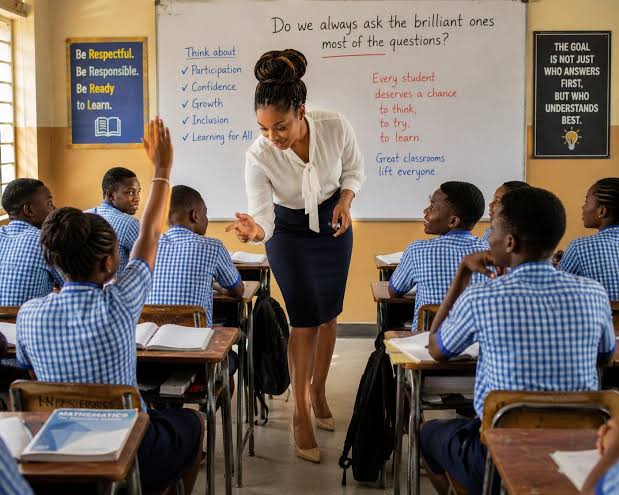

A classroom can have modern furniture, good ventilation and enough space for every learner, yet still fail to create an environment where students feel comfortable learning. On the other hand, a crowded classroom with limited resources may still produce meaningful learning experiences when students feel respected, encouraged and actively involved. This is why classroom size, although important, does not tell the whole story about educational quality.
Classroom culture refers to the shared atmosphere, values, behaviours and relationships that shape everyday learning. It influences whether students feel safe enough to ask questions, whether mistakes are treated as opportunities to learn and whether learners believe their contributions matter. Research on school climate and learning environments has consistently linked positive, supportive environments with better student engagement and academic outcomes. However, a smaller class does not automatically create these conditions.
This does not mean class size is irrelevant. Large classes can place serious pressure on teachers, especially in Nigerian public schools where overcrowding can make individual attention difficult. Nevertheless, the culture created inside the classroom can determine whether available learning opportunities are used well. A class of 25 students can become disengaged and fearful, while a larger class can still develop participation, cooperation and a strong sense of belonging when teaching and relationships are handled effectively.
The culture of a classroom begins with what students experience every day. From the moment a teacher enters the room, learners are observing what is acceptable. They notice whether questions are welcomed, whether some students are repeatedly ignored and whether mistakes are punished with embarrassment or treated as part of learning.
A positive classroom culture gives students the confidence to participate. When learners believe they will be mocked for giving a wrong answer, many will remain silent even when they have useful ideas. Over time, silence can become a habit. Students may attend lessons, copy notes and prepare for examinations without developing the confidence to think aloud, ask questions or challenge ideas respectfully.
However, when students know that they can make mistakes without humiliation, they are more likely to participate. This is particularly important because learning is not always a smooth process. Students often need to attempt difficult tasks, misunderstand concepts and receive correction before they improve. A classroom that treats every mistake as evidence of failure can make learners afraid of taking intellectual risks.
The teacher plays a major role in setting this tone. A teacher does not have to become overly informal or abandon discipline to create a welcoming environment. Clear expectations and order are still necessary. However, discipline and respect can exist together. Students are more likely to respond positively when classroom rules are applied fairly and when correction does not become personal humiliation.
In addition, classroom culture is shaped by how students relate to one another. Bullying, ridicule and unhealthy competition can make learning difficult even when the physical classroom is comfortable. A student who fears classmates may struggle to concentrate or participate fully. Therefore, teachers need to pay attention not only to academic performance but also to the relationships developing within the class.
A supportive culture encourages students to see learning as something they can do together rather than a constant battle to prove who is the smartest person in the room. Healthy competition can motivate learners, but cooperation is equally important. Group discussions, peer support and collaborative tasks can help students understand that different people bring different strengths to the learning process.
This is one reason classroom culture can be more influential than physical size alone. Space can make movement easier, but it cannot automatically make students feel that they belong. Furniture can improve comfort, but it cannot automatically build trust. These qualities are developed through daily interactions.
Psychological safety is an important part of effective learning. Students need to feel that they can speak, ask for help and admit when they do not understand something. In classrooms where fear dominates, learners may focus more on avoiding embarrassment than understanding the lesson.
This problem can appear in subtle ways. A teacher may repeatedly call only on the highest-performing students, while quieter learners gradually become invisible. Another teacher may respond impatiently when students ask for clarification, creating the impression that questions are a sign of laziness or poor intelligence.
Such experiences can affect student confidence over time.
A learner who is repeatedly made to feel unintelligent may eventually stop trying to participate. This does not necessarily mean the student lacks ability. Instead, the classroom environment may have taught the learner that staying silent is safer than making a mistake.
Positive classroom culture can change this experience. Teachers who encourage questions, listen carefully and provide constructive feedback can help students develop confidence in their ability to learn. Research on learning environments has shown that positive teacher-student relationships and a supportive school climate are associated with stronger engagement and better educational experiences.
Students also respond to fairness. When they believe that teachers have favourites or treat learners differently based on academic ability, family background or personality, resentment can grow. Fairness does not mean treating every student in exactly the same way. Students have different needs and personalities. Rather, it means ensuring that every learner is treated with dignity and given a genuine opportunity to participate.
In Nigerian classrooms, where teachers may work with large numbers of students and limited resources, maintaining this balance can be difficult. Overcrowding creates genuine challenges, including increased workloads, reduced opportunities for individual feedback and difficulties managing behaviour. Nevertheless, culture remains important precisely because resources are not always ideal.
A teacher may not be able to reduce the number of students assigned to a classroom, but they can influence how students interact with one another. They can establish routines that encourage participation, recognise effort and ensure that correction remains constructive.
Small actions can also have a lasting effect. Learning students’ names, acknowledging improvement and asking quieter learners for their views can help create a stronger sense of belonging. These actions may appear ordinary, but they communicate an important message: every student in the classroom matters.
Furthermore, a positive culture can influence behaviour. Students who feel connected to their teachers and classmates may be more willing to follow classroom expectations. Discipline becomes easier when learners understand the purpose of rules and believe that those rules are applied fairly.
This does not mean a positive culture eliminates misconduct. However, an environment built entirely on fear may produce temporary obedience without genuine engagement. Students may behave well when closely monitored but lose motivation when supervision disappears.
A healthy classroom culture encourages students to take responsibility for their learning and behaviour because they feel part of a community.
Read also:
The power of positive reinforcement in Nigerian classrooms
The link between student confidence and classroom participation
Classroom culture does not develop accidentally. Teachers influence it through their words, decisions and daily habits. The way a teacher responds to a wrong answer, manages disagreement or handles a struggling student can shape how the entire class behaves.
Students often copy the behaviour they observe. A teacher who speaks respectfully is more likely to encourage respectful communication among learners. Similarly, a teacher who humiliates students may unintentionally normalise ridicule within the classroom.
This is why professional teaching involves more than delivering subject content. Teachers are also creating a social environment in which learning takes place.
Encouragement is particularly important. Students do not need constant praise for every action, but they benefit from feedback that recognises genuine effort and improvement. A learner who performs poorly in Mathematics, for example, may need to hear what they are doing correctly as well as what they need to improve.
Constructive feedback gives students a path forward. Insults simply communicate disappointment without explaining how improvement can happen.
In addition, teachers can create a stronger learning culture by allowing students to contribute to discussions. Education should not become a one-way process where teachers speak and students simply copy. While direct instruction remains important, learners also benefit from explaining ideas, asking questions and connecting lessons to their own experiences.
This approach can be especially valuable in large classrooms. A teacher may not be able to have an extended individual conversation with every student during every lesson. However, group discussions, peer learning and carefully structured participation can allow more learners to become actively involved.
Technology may also support classroom culture when used appropriately. Digital tools can create opportunities for collaboration and access to information. However, technology cannot replace human relationships. A classroom with expensive devices but poor communication may still struggle to engage students.
The most valuable learning environment is therefore not necessarily the one with the smallest number of students or the most impressive equipment. It is the one where available resources are supported by trust, fairness and purposeful teaching.
For policymakers, this should not become an excuse to ignore overcrowded classrooms. Governments and school authorities still have a responsibility to improve infrastructure, recruit qualified teachers and reduce excessive class sizes. Research and educational experience have repeatedly shown that overcrowding can make effective teaching more difficult.
However, improving numbers alone will not solve every problem.
A school may reduce a class from 60 students to 30, but if students remain afraid to speak, if bullying continues and if teachers rely on humiliation, learning may still suffer. Physical conditions and classroom culture must therefore work together.
The strongest schools recognise that educational quality is both physical and human. Students need suitable classrooms, adequate learning materials and manageable teacher workloads. At the same time, they need teachers who create an environment where curiosity is encouraged and mistakes become part of growth.
Ultimately, students may forget the exact size of the classroom where they learnt a particular subject. However, they are more likely to remember how that classroom made them feel.
They may remember the teacher who encouraged them to speak when they lacked confidence. They may remember classmates who made them feel included or the moment they realised that making a mistake did not mean they were incapable of learning.
These experiences can shape attitudes towards education long after students leave school.
Classroom size matters, particularly in countries where overcrowding remains a major challenge. Yet the number of desks in a room cannot, by itself, determine whether meaningful learning happens. Culture gives the classroom its character.
When students feel respected, safe and included, they are more likely to engage with learning. When teachers create fairness, encourage participation and respond constructively to mistakes, the classroom becomes more than a physical space. It becomes a community where learning has room to grow.
For Nigeria’s education system, the long-term goal should be to improve both conditions at the same time: classrooms should become less overcrowded, better equipped and more conducive to learning, while teachers should also be supported to build positive relationships with students.
After all, a smaller classroom may make teaching easier, but a positive classroom culture can make learning meaningful.