
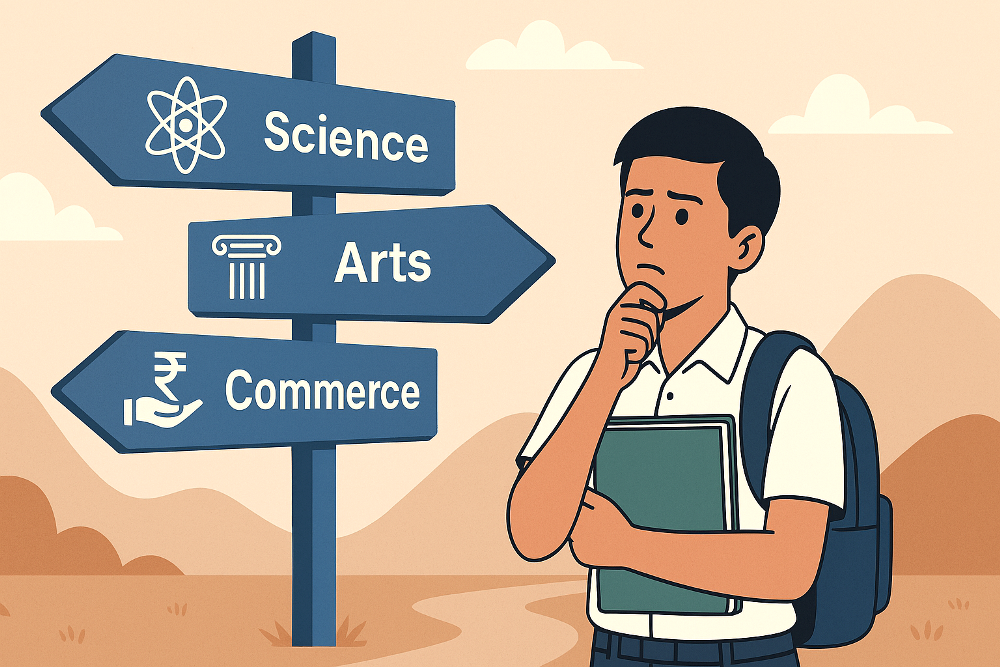

Art classes are often treated differently from subjects such as mathematics, English, science and technology. While these subjects are commonly described as important for a student’s future, art is sometimes regarded as something students can enjoy only when their “serious” schoolwork is finished. In some families and schools, students who perform well in art may receive less recognition than those who excel in subjects considered more academically valuable. This attitude can make students underestimate what art education offers and discourage children who naturally enjoy drawing, painting, design, crafts or other creative activities from taking their abilities seriously.
However, art is not simply about producing attractive pictures. It can develop observation, communication, creativity, patience, critical thinking and the ability to express ideas in different ways. Understanding why students think less of art classes is therefore important because the problem is not necessarily a lack of interest in creativity; in many cases, it is the result of the way art is perceived and positioned within education.
One major reason students think less of art classes is the message they receive about which subjects matter most. In many homes, academic success is closely associated with subjects that appear to lead directly to professional careers. Parents may encourage children to concentrate on medicine, engineering, law, accounting, computer science or other fields while treating creative subjects as secondary. Students naturally absorb these attitudes, particularly when they repeatedly hear that certain subjects are essential while art is merely for relaxation or personal enjoyment.
A child who repeatedly hears that mathematics and science are essential while art is simply a hobby may eventually stop taking art seriously. Even when the child enjoys drawing or creating things, they may begin to see that interest as something that should remain outside their education. This perception can become stronger when schools devote more attention to certain subjects. If students are constantly reminded about examination performance in particular subjects but rarely hear similar conversations about creativity, they may conclude that some forms of learning are more valuable than others.
The problem is not that mathematics, science or language are unimportant. They are fundamental areas of education. The problem is creating the impression that creative abilities have little academic or economic value. Art education can develop skills that are useful far beyond an art classroom. A student working on a drawing, for example, has to observe carefully, make decisions about proportion and composition, correct mistakes and pay attention to detail. A student designing something has to consider how an idea can be communicated visually. These are forms of thinking, not simply leisure activities.
The modern economy also demonstrates that creative ability can have practical value. Graphic design, animation, architecture, advertising, fashion, photography, film, illustration, user-interface design and other creative industries depend on people who can turn ideas into visual or artistic forms. Yet students may not always see these possibilities when art is presented as an occasional school activity rather than a serious area of learning.
Career pressure also influences how students perceive art. In many Nigerian families, parents understandably want their children to have stable and financially rewarding careers. Because creative careers are sometimes viewed as uncertain, students who show strong artistic ability may be encouraged to choose more conventional professional paths. A student may be told that drawing is good, but that it should remain a hobby, while another may be discouraged from studying a creative subject because of fears that it will not provide a reliable income.
Such concerns often come from genuine parental care. However, they can also prevent young people from exploring abilities that could eventually become valuable skills. The world of work has changed considerably, and creative professionals can now work with clients across different countries, sell digital products online, build personal brands and work remotely. Technology has also created new opportunities in areas that did not exist in the same form for previous generations.
This does not mean every student who enjoys art should become a professional artist. Rather, students should be allowed to understand the range of possibilities before deciding whether their creative abilities are worth developing. A child who learns to take their artistic ability seriously may eventually discover an interest in architecture, animation, advertising, product design, photography or another field that combines creativity with other disciplines. The important point is that students should not be made to feel that choosing a creative path means choosing an inferior path.
The way art is taught can also affect how students value it. Art should provide opportunities for experimentation and self-expression, but students may sometimes encounter lessons where they are expected to reproduce a particular drawing or follow a fixed process without much room for personal interpretation. When this happens repeatedly, students may begin to think that being good at art simply means being able to copy accurately.
Creativity is broader than copying. Students should have opportunities to explore different materials, develop their own ideas, interpret subjects differently and explain the thinking behind their work. They should also be exposed to different forms of art rather than being restricted to one narrow definition of what artistic ability looks like.
For example, one student may be skilled at drawing, another at sculpture, another at digital illustration and another at photography or textile design. A student who is not particularly good at drawing may still possess strong creative abilities. If art education focuses too heavily on one type of skill, some students may wrongly conclude that they are not creative.
Teachers can change this by designing activities that allow different strengths to emerge. Instead of asking every student to produce exactly the same picture, a teacher could give students a theme and allow them to decide how to represent it. This encourages decision-making and gives learners a greater sense of ownership. It also makes the classroom more interesting because students can see how differently their classmates interpret the same idea.
Nigeria’s strong examination culture can also influence how students value art. When students and parents are focused heavily on major examinations, subjects perceived as directly connected to admission and career opportunities often receive greater attention. Time is then concentrated on subjects considered essential, while creative activities may be pushed aside.
This can be particularly damaging for younger students because children do not only need academic knowledge. They also need opportunities to develop curiosity, imagination, communication and the confidence to experiment. Creative activities can contribute to these areas while giving children another way to understand and communicate their experiences.
The issue is therefore not whether art should replace other subjects. It should not. Instead, schools should recognise that different subjects contribute different forms of knowledge and skill. A student may learn to analyse numerical information in mathematics, investigate evidence in science, communicate through language and explore visual ideas through art. These abilities can complement rather than compete with one another.
There are also connections between art and subjects that students may not immediately recognise. Architecture involves artistic design and mathematics. Animation combines storytelling, technology and visual creativity. Fashion involves design, materials and business. Advertising combines language, psychology and visual communication. The boundaries between academic disciplines are not always as clear as school timetables make them appear.
Read also:
Why Many Students Fear Science Classes and How Schools Can Change It
How Nigerian parents accidentally kill creativity in their children
Another reason students underestimate art is that they may not understand what they are actually learning. If an art lesson is described simply as “drawing time”, students may naturally see it as less demanding than a mathematics or science lesson. However, a well-designed art class can require students to observe, plan, analyse, make choices, solve problems and evaluate their own work.
Consider a student creating a poster. The student has to decide what message to communicate, which images to use, how to organise the information and how to make the final product understandable to the intended audience. That is problem-solving. Similarly, when a student creates a piece of artwork and realises that the original idea is not working, they have to decide whether to modify it, start again or find another way to achieve the intended result. That is adaptability.
Art also teaches students to accept that there may be more than one reasonable solution to a problem. A mathematics question may have a specific correct answer, while an artistic challenge can produce several successful outcomes. Learning to work within that uncertainty can be valuable.
Students therefore need to understand that art is not simply about talent. It involves practice, technique, decision-making and sustained effort.
Lack of resources can affect students’ attitudes The quality of resources available for art education can also influence how students perceive the subject. When students have access to appropriate materials, exhibitions, digital tools, visual references and spaces where they can create, art can feel like a serious area of study. Where resources are limited, however, art may be reduced to occasional classroom activities using whatever materials are available.
Schools do not necessarily need expensive equipment to teach meaningful art. Creativity can be developed using affordable and locally available materials. However, students should still be given opportunities to see high-quality artwork and understand the variety of careers and practices connected to the creative world.
Digital technology can also expand access. Students can explore museums, galleries, illustrations, animation and design from around the world without physically travelling to those locations. This can help them understand that art is a broad field with different cultures, techniques and professional possibilities.
Teachers have a significant role in helping students take art seriously. An enthusiastic teacher can show learners that art is not merely about producing something beautiful. It is about communicating ideas, exploring perspectives and developing the ability to create.
Teachers can also help students understand the connection between art and everyday life. Buildings, packaging, clothing, websites, advertisements, films, books, mobile applications and public spaces all involve elements of design and visual communication. Once students begin noticing these connections, they may start to understand why creative thinking matters.
Feedback is equally important. Students should not be made to believe that artistic ability is something a person either has or does not have. Like many other skills, art can improve through practice and guidance. Instead of saying that a student is simply “not artistic”, teachers can identify specific areas for improvement. Perhaps the student needs to practise proportions, experiment with colour, develop better composition or become more confident with a particular material. This gives the learner something concrete to work on.
Teachers can also encourage students to discuss their creative decisions. Asking a student why they selected a particular image, colour or arrangement can turn the artwork into an opportunity for critical thinking and communication.
Changing the way students view art also requires support from home. Parents do not have to turn every child’s artistic interest into a career. However, they should avoid dismissing creative ability simply because it does not fit their preferred definition of success.
A child who spends time drawing, making things, taking photographs or designing objects may be developing genuine skills. Instead of immediately telling the child to concentrate on “serious” subjects, parents can ask what they enjoy creating and encourage them to explore it further.
This can coexist with academic responsibility. A child can be encouraged to perform well in mathematics and still be allowed to develop artistic interests. In fact, giving children opportunities to explore different areas may help them discover strengths that could eventually complement their academic education.
The goal should be to raise well-rounded young people rather than students who are only confident in areas that produce examination grades.
Many students think less of art classes because they have been taught, directly or indirectly, that creative subjects are less important than traditional academic disciplines. Family expectations, examination pressure, career concerns, limited resources and the way art is sometimes taught can all contribute to this perception. However, art education offers far more than drawing and painting. It can help students develop creativity, observation, communication, problem-solving, patience and confidence.
The solution is not to force every student to become an artist. It is to give creative education the respect it deserves and allow students to discover what they can do with it. When schools treat art as a genuine form of learning rather than a break from “serious” subjects, students are more likely to appreciate its value.
When parents stop treating creative interests as distractions from success, children can explore their abilities without feeling that they must choose between being academically successful and being creative. Art should not have to compete with science or mathematics for legitimacy. A strong education system needs all of them because students need different ways to understand the world, express ideas and solve problems.