
[]
Home response.text()) .then(data => new DOMParser().parseFromString(data, “text/html”)) .then(dom => dom.querySelector(“div.uos-sitemap”)) .then(sitemap => getBreadcrumbsFromSitemap(sitemap)) .catch(() => getBreadcrumbsFromPath()) .then(breadcrumbs => buildBreadcrumbsHtml(breadcrumbs)) function findElementToStartFrom(sitemap) { let element = sitemap.querySelector(“a[href='” + windowPath + “?’]”) || sitemap.querySelector(“a[href='” + windowPath + “‘]”) if (element) { return element } let pathParts = windowPath.split(“/”).filter(part => part !== ”) for(let i = pathParts.length; i >=1 ; i–) { let path = (‘/’ + pathParts.slice(0, i).join(‘/’)) let element = sitemap.querySelector(“a[href='” + path + “‘]”) || sitemap.querySelector(“a[href='” + path + “/index.page’]”) || sitemap.querySelector(“a[href='” + path + “?’]”) || sitemap.querySelector(“a[href='” + path + “/index.page?’]”) if (element) { return element } } throw new Error(“Can’t find starting element in sitemap”) } function getBreadcrumbsFromSitemap(sitemap) { let breadcrumbs = [] let element = findElementToStartFrom(sitemap); while (element) { breadcrumbs.push(makeBreadcrumb((new URL(element.href)).pathname, element.innerText.trim())) element = getParentLink(element) } let homeTitle = sitemap.querySelector(“h2”).innerText.trim() let homeUrl = sitemap.querySelector(“a”).href.trim() breadcrumbs.push(makeBreadcrumb((new URL(homeUrl).pathname), homeTitle)) return breadcrumbs.reverse() } function getBreadcrumbsFromPath() { console.log(“Building breadcrumbs from path”) let breadcrumbs = [] let pathParts = windowPath.split(“/”).filter(part => part !== ”) for(let i = 1; i char.toUpperCase()) breadcrumbs.push(makeBreadcrumb(url, title)) } return breadcrumbs } function makeBreadcrumb(url, name) { return {href: url.trim(), name: name.trim()} } function buildBreadcrumbsHtml(breadcrumbs) { let rootElement = document.querySelector(“#BreadcrumbListNavElem”) breadcrumbs.forEach(crumb => { if (crumb.href === windowPath) { return } let rootDiv = document.createElement(“div”) rootDiv.setAttribute(“typeof”, “ListItem”) rootDiv.setAttribute(“property”, “itemListElement”) rootDiv.setAttribute(“class”, “uos-breadcrumb-child”) let link = document.createElement(“a”) link.href = crumb.href link.setAttribute(“title”, crumb.name) link.setAttribute(“typeOf”, “WebPage”) link.setAttribute(“property”, “item”) let titleSpan = document.createElement(“span”) titleSpan.innerText = crumb.name rootDiv.appendChild(link) link.appendChild(titleSpan) rootElement.innerHTML += “>” rootElement.appendChild(rootDiv) }) } function getParentLink(element) { while (element.tagName !== “UL”) { element = element.parentElement if (!element) { return null } } return Array.from(element.parentElement.children).find(item => item.tagName === “A”) } ]]>
Published: 2025-06-26 08:15:00
.jpg) The knee sleeve
The knee sleeve
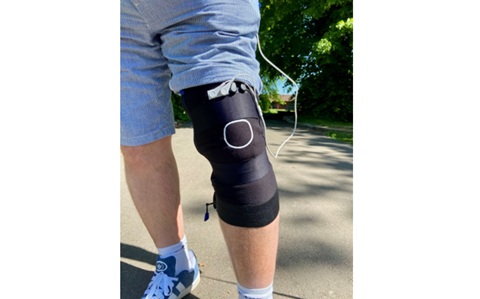
An electronic knee sleeve providing relief from osteoarthritis pain has been developed by a team from the University of Southampton.
The wearable device has been designed in collaboration with people with knee osteoarthritis, and with input from physiotherapists and surgeons.
It uses TENS (transcutaneous electrical nerve stimulation) to relieve knee pain and enable people to walk better, further and longer with less or no pain.
The sleeve has electrodes printed around the knee area, which are connected to an electronic control unit which provides optimal TENS performance.
 Professor Kai Yang
The project is funded by the Medical Research Council. The team behind the pioneering device is led by Kai Yang, Professor of E-textiles in Healthcare at the University of Southampton.
She said: “Knee osteoarthritis is a prevalent condition affecting about five million people in the UK. We’ve developed the electrotherapy knee sleeve with healthcare professionals and with the input of people who have osteoarthritis knee pain.
“The response from participants has been fantastic, with most reporting that it is helping to reduce pain and stiffness, enabling them to do more activities. The device is also comfortable to wear and easy to use.”
The device is currently undergoing a 12-week clinical trial involving participants with knee osteoarthritis. They are using it for up to one hour at a time, five to seven days per week.
.jpg) Mike Coyne and Charlie (left), and Steve Marsh and Bentley
Mike Coyne and Charlie (left), and Steve Marsh and Bentley
They include Mike Coyne, 58, from Hedge End, and Steve Marsh, 69, from Dibden Purlieu, who are both on the NHS waiting list for a knee replacement.
Mike, who has suffered with knee osteoarthritis for about eight years, said: “With the sleeve on, I can walk a lot further and a lot quicker, without limping. It’s really helped me when it comes to taking my dog Charlie for a walk – taking him out is now enjoyable exercise rather than a painful chore. With the sleeve, I can get a bit of exercise – it’s improved my overall health.”
Steve, who can now walk his dog Bentley without being in pain, added: “In terms of improving everyday life, the sleeve has been fantastic for me. I walk Bentley twice a day, I can now walk further using the garment. I would highly recommend it.”
Watch our video about the project: