
[]
Home response.text()) .then(data => new DOMParser().parseFromString(data, “text/html”)) .then(dom => dom.querySelector(“div.uos-sitemap”)) .then(sitemap => getBreadcrumbsFromSitemap(sitemap)) .catch(() => getBreadcrumbsFromPath()) .then(breadcrumbs => buildBreadcrumbsHtml(breadcrumbs)) function findElementToStartFrom(sitemap) { let element = sitemap.querySelector(“a[href='” + windowPath + “?’]”) || sitemap.querySelector(“a[href='” + windowPath + “‘]”) if (element) { return element } let pathParts = windowPath.split(“/”).filter(part => part !== ”) for(let i = pathParts.length; i >=1 ; i–) { let path = (‘/’ + pathParts.slice(0, i).join(‘/’)) let element = sitemap.querySelector(“a[href='” + path + “‘]”) || sitemap.querySelector(“a[href='” + path + “/index.page’]”) || sitemap.querySelector(“a[href='” + path + “?’]”) || sitemap.querySelector(“a[href='” + path + “/index.page?’]”) if (element) { return element } } throw new Error(“Can’t find starting element in sitemap”) } function getBreadcrumbsFromSitemap(sitemap) { let breadcrumbs = [] let element = findElementToStartFrom(sitemap); while (element) { breadcrumbs.push(makeBreadcrumb((new URL(element.href)).pathname, element.innerText.trim())) element = getParentLink(element) } let homeTitle = sitemap.querySelector(“h2”).innerText.trim() let homeUrl = sitemap.querySelector(“a”).href.trim() breadcrumbs.push(makeBreadcrumb((new URL(homeUrl).pathname), homeTitle)) return breadcrumbs.reverse() } function getBreadcrumbsFromPath() { console.log(“Building breadcrumbs from path”) let breadcrumbs = [] let pathParts = windowPath.split(“/”).filter(part => part !== ”) for(let i = 1; i char.toUpperCase()) breadcrumbs.push(makeBreadcrumb(url, title)) } return breadcrumbs } function makeBreadcrumb(url, name) { return {href: url.trim(), name: name.trim()} } function buildBreadcrumbsHtml(breadcrumbs) { let rootElement = document.querySelector(“#BreadcrumbListNavElem”) breadcrumbs.forEach(crumb => { if (crumb.href === windowPath) { return } let rootDiv = document.createElement(“div”) rootDiv.setAttribute(“typeof”, “ListItem”) rootDiv.setAttribute(“property”, “itemListElement”) rootDiv.setAttribute(“class”, “uos-breadcrumb-child”) let link = document.createElement(“a”) link.href = crumb.href link.setAttribute(“title”, crumb.name) link.setAttribute(“typeOf”, “WebPage”) link.setAttribute(“property”, “item”) let titleSpan = document.createElement(“span”) titleSpan.innerText = crumb.name rootDiv.appendChild(link) link.appendChild(titleSpan) rootElement.innerHTML += “>” rootElement.appendChild(rootDiv) }) } function getParentLink(element) { while (element.tagName !== “UL”) { element = element.parentElement if (!element) { return null } } return Array.from(element.parentElement.children).find(item => item.tagName === “A”) } ]]>
Published: 2025-01-27 10:12:00
 Janine Webber
The Southampton community is coming together today to mark the 80th anniversary of the liberation of Auschwitz on the annual international Holocaust and Genocide Memorial Day.
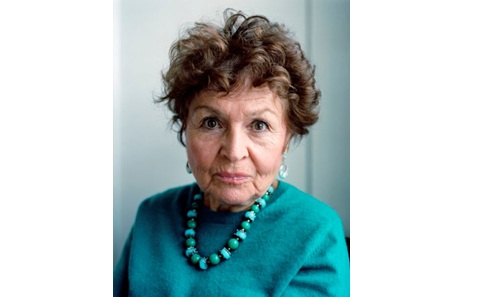
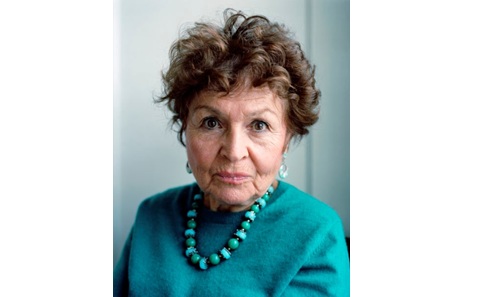
One of the last remaining survivors of the former Polish Lvov ghetto, Janine Webber, is attending the city’s memorial event, organised and hosted by the University of Southampton’s Parkes Institute for the Study of Jewish/non-Jewish Relations .
Janine, 92, will share her story with Anoushka Alexander-Rose , postgraduate researcher at the University of Southampton, whose own grandfather fled Lvov (now Lviv, Ukraine) on the Kindertransport in 1939.
Janine was seven when the Second World War broke out. Her family was forced to leave home with just one suitcase and was allocated a small room in a house on the edge of the city.
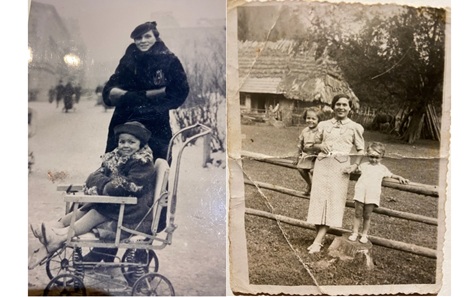 Left: A young Janine with her mother. Right: Janine (sitting on the fence) with her mother and her brother, Tunio.
She said: “I used to play in the streets, but seeing armed soldiers I became very frightened. Once, I hid in a kennel. I remember looking through the wooden slats at the Gestapo approaching. I couldn’t look at their faces, I looked at their shiny black boots. For years, I had nightmares about the boots coming to get me.”
Fearing German raids, Janine’s parents dug a hiding place under a wardrobe for Janine, her brother and their mother. With no room for other family members to hide, Janine’s father was shot, and she never saw her grandmother again.
Janine and her surviving relatives were forced into the ghetto, where her mother contracted typhus and died aged 29.
Janine went into hiding with her aunt, uncle and brother, then later spent a year in an underground bunker under stables in a convent, with 13 other Jews. They were hidden by a man called Edek, who worked as the convent’s watchman, and who Janine describes as a ‘hero’.
However, the conditions in the bunker were cramped and poor, so her aunt arranged false papers for her, and Janine, aged 11, was able to work as a maid in Krakow until it was liberated in 1945.
After the war, Janine and her aunt left Poland for Paris. In 1956, Janine came to the UK where she met her husband and settled in London.
“My message is to be kind to people, to be helpful, and to stand up to prejudice and persecution, not through violence but through talking and communicating. My dream is that we live in peace with each other,” she said.
While Anoushka’s grandfather escaped Lvov in 1939, her grandfather’s parents and brother remained in the city. They did not survive, and Anoushka’s family don’t know what happened to them.
She said: “My grandfather never spoke about his family loss or experiences, but I have been committed in recent years, inspired by my work with the Parkes Institute, to share his story more and invite conversations about the impact of the Holocaust on the second and third generations, especially now there are so few survivors still with us.”
Professor Neil Gregor , Director of the Parkes Institute, said: “It is, as ever, a privilege to chair our annual commemorative event, and to share in remembering the victims of the many genocides that have blighted the modern world.”
The event is being held at the University of Southampton’s Sir James Matthews Building in Guildhall Square.
Students from Eastleigh’s Barton Peveril Sixth Form College will share reflections on their participation in the Holocaust Education Trust’s Lessons in Auschwitz programme.
The audience will also hear a reading from Vesna Maric’s ‘Bluebird’, describing her experiences as a young refugee from the Bosnian War of 1992-1995.