
[]
Home response.text()) .then(data => new DOMParser().parseFromString(data, “text/html”)) .then(dom => dom.querySelector(“div.uos-sitemap”)) .then(sitemap => getBreadcrumbsFromSitemap(sitemap)) .catch(() => getBreadcrumbsFromPath()) .then(breadcrumbs => buildBreadcrumbsHtml(breadcrumbs)) function findElementToStartFrom(sitemap) { let element = sitemap.querySelector(“a[href='” + windowPath + “?’]”) || sitemap.querySelector(“a[href='” + windowPath + “‘]”) if (element) { return element } let pathParts = windowPath.split(“/”).filter(part => part !== ”) for(let i = pathParts.length; i >=1 ; i–) { let path = (‘/’ + pathParts.slice(0, i).join(‘/’)) let element = sitemap.querySelector(“a[href='” + path + “‘]”) || sitemap.querySelector(“a[href='” + path + “/index.page’]”) || sitemap.querySelector(“a[href='” + path + “?’]”) || sitemap.querySelector(“a[href='” + path + “/index.page?’]”) if (element) { return element } } throw new Error(“Can’t find starting element in sitemap”) } function getBreadcrumbsFromSitemap(sitemap) { let breadcrumbs = [] let element = findElementToStartFrom(sitemap); while (element) { breadcrumbs.push(makeBreadcrumb((new URL(element.href)).pathname, element.innerText.trim())) element = getParentLink(element) } let homeTitle = sitemap.querySelector(“h2”).innerText.trim() let homeUrl = sitemap.querySelector(“a”).href.trim() breadcrumbs.push(makeBreadcrumb((new URL(homeUrl).pathname), homeTitle)) return breadcrumbs.reverse() } function getBreadcrumbsFromPath() { console.log(“Building breadcrumbs from path”) let breadcrumbs = [] let pathParts = windowPath.split(“/”).filter(part => part !== ”) for(let i = 1; i char.toUpperCase()) breadcrumbs.push(makeBreadcrumb(url, title)) } return breadcrumbs } function makeBreadcrumb(url, name) { return {href: url.trim(), name: name.trim()} } function buildBreadcrumbsHtml(breadcrumbs) { let rootElement = document.querySelector(“#BreadcrumbListNavElem”) breadcrumbs.forEach(crumb => { if (crumb.href === windowPath) { return } let rootDiv = document.createElement(“div”) rootDiv.setAttribute(“typeof”, “ListItem”) rootDiv.setAttribute(“property”, “itemListElement”) rootDiv.setAttribute(“class”, “uos-breadcrumb-child”) let link = document.createElement(“a”) link.href = crumb.href link.setAttribute(“title”, crumb.name) link.setAttribute(“typeOf”, “WebPage”) link.setAttribute(“property”, “item”) let titleSpan = document.createElement(“span”) titleSpan.innerText = crumb.name rootDiv.appendChild(link) link.appendChild(titleSpan) rootElement.innerHTML += “>” rootElement.appendChild(rootDiv) }) } function getParentLink(element) { while (element.tagName !== “UL”) { element = element.parentElement if (!element) { return null } } return Array.from(element.parentElement.children).find(item => item.tagName === “A”) } ]]>
Published: 2025-01-15 14:54:00
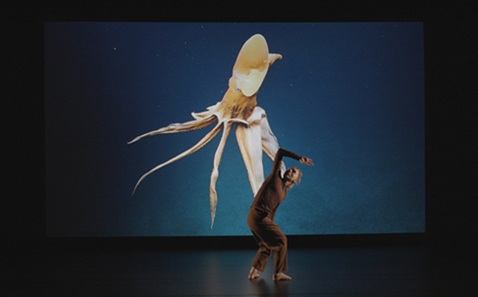
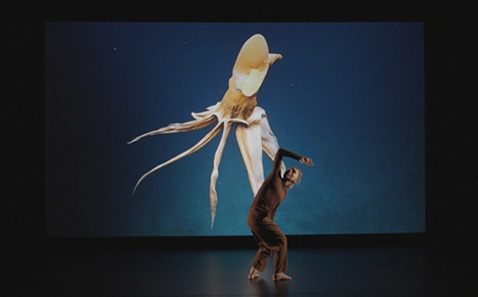 Emma Critchley’s ‘Sirens’, part of ‘Soundings’, is a series of short films showing an encounter between a dancer and creatures from the deep sea. Image courtesy of Emma Critchley
Creatures from the deep are the focus of an upcoming exhibition at the University of Southampton’s John Hansard Gallery.
The exhibition, called Soundings, addresses the topic of deep-sea mining and its tensions and potential impacts.
Artist Emma Critchley is behind Soundings, which features filmmaking, choreography and public engagement events.
She worked with communities and specialists, including researchers from the University of Southampton and the National Oceanography Centre in Southampton, to explore our relationship with the deep ocean in order to create Soundings.
They included Jon Copley, Professor of Ocean Exploration and Science Communication at the University of Southampton.
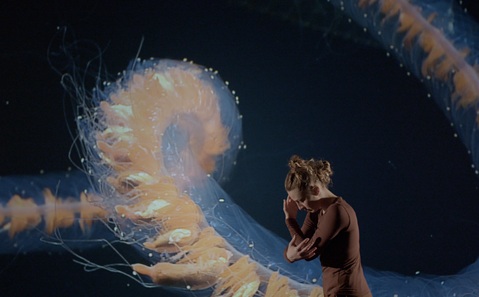 A scene from ‘Sirens’. Image courtesy of Emma Critchley
Professor Copley , an expert in deep sea mining and ecology, said: “Emma Critchley’s work is shining an important light on something that most of us don’t get to see – the deep ocean. Commercial deep-sea mining is very much on the international political agenda, but its impact on the ecology of worlds that are invisible to us is not yet understood.
“Soundings is a powerful and striking exhibition, bringing the opportunity to encounter some of the amazing deep-sea creatures of our world and inviting discussion of humans’ relationship with the deep sea. It was a pleasure to be involved in bringing Soundings to fruition and I’m excited to see it open to the public.”
Central to the Soundings exhibition is a multi-screen film installation highlighting the tensions and possibilities surrounding deep-sea mining, using film, sound, and dance. On certain days during the exhibition, a dancer will activate the installation by moving with deep-sea creatures on the screens.
Also featured is a co-written open letter, bringing together indigenous Pacific activists, legal scholars and marine scientists on the topic of our relationship with the deep-ocean and the need to protect it.
Soundings will run at John Hansard Gallery, 142-144 Above Bar Street, Southampton, from Saturday 8 February to Saturday 3 May. Find out more on the John Hansard Gallery website .