
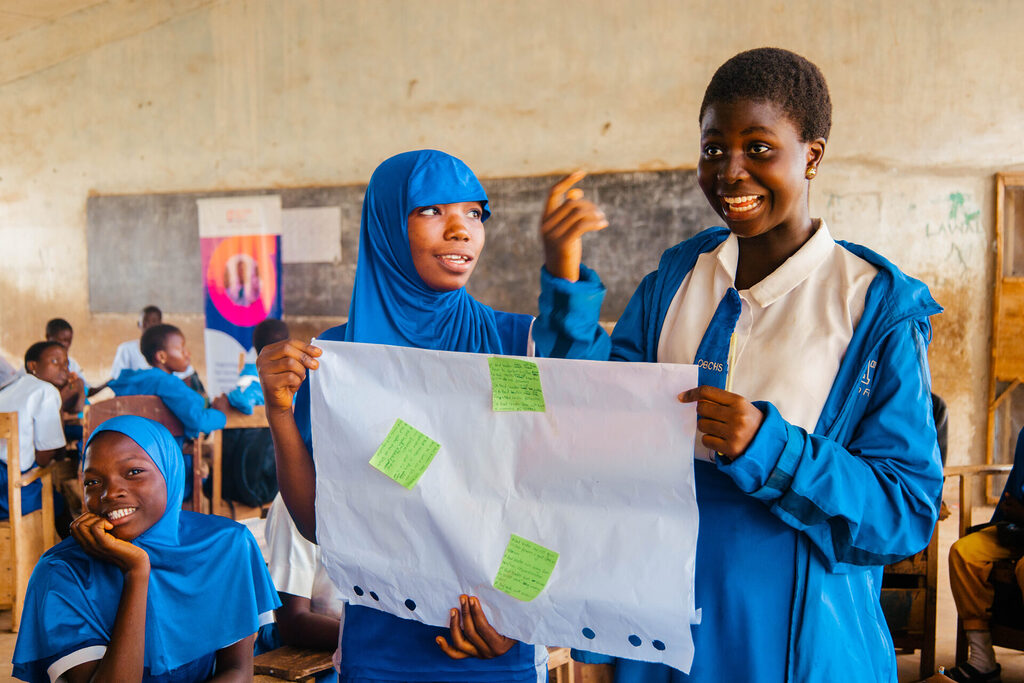

Academic performance is often discussed in terms of intelligence, effort, teaching quality, and access to resources. However, one of the most influential yet underexamined factors shaping student outcomes is gender expectation. Across different societies, including Nigeria, deeply rooted beliefs about what boys and girls are “naturally” suited for continue to influence how they learn, what they study, and how they perform in school.
These expectations are not always explicit. They are embedded in cultural norms, classroom interactions, parental attitudes, peer dynamics, and even institutional policies. Over time, they shape students’ confidence, subject choices, and academic identity. The result is not only uneven performance across subjects but also long-term disparities in educational and career outcomes.
Understanding how gender expectations affect academic performance requires moving beyond simplistic assumptions about ability and examining the structural and psychological forces at play. This article explores how these expectations are formed, how they influence learning behaviours and outcomes, and what their broader implications are for education systems.
Gender expectations begin long before students enter formal schooling. From early childhood, boys and girls are often socialised differently, with subtle cues shaping their attitudes towards learning. Boys may be encouraged to be assertive, independent, and risk-taking, while girls are often guided towards compliance, neatness, and emotional sensitivity. These early influences carry into the classroom, where they intersect with institutional practices.
In many school settings, teachers, often unconsciously reinforce gender norms through their interactions. Studies have shown that teachers may call on boys more frequently in subjects perceived as analytical, such as mathematics and science, while offering more encouragement to girls in language-based subjects. Over time, these patterns signal to students where they are expected to excel.
Curriculum design can also reflect gendered assumptions. Textbooks and learning materials sometimes portray men and women in stereotypical roles, subtly reinforcing ideas about what is appropriate for each gender. For instance, examples in science and technology may disproportionately feature male figures, while caregiving or domestic roles are often associated with women.
In Nigeria, these dynamics are further shaped by cultural and socio-economic factors. In some communities, girls’ education may be deprioritised due to expectations around early marriage or domestic responsibilities. According to data from UNESCO, millions of girls in sub-Saharan Africa are at risk of dropping out of school before completing secondary education, with gender norms playing a significant role.
At the same time, boys face their own set of expectations. They are often perceived as naturally less disciplined or less academically inclined, particularly in reading and writing. This can lead to lower expectations from teachers and parents, which in turn affects their engagement and performance.
These early and sustained influences create a framework within which students interpret their abilities. Rather than seeing academic success as a function of effort and learning, they may begin to view it as something tied to gender identity.
The influence of gender expectations becomes more pronounced as students progress through the education system. One of the most significant effects is on self-perception. Students internalise societal messages about their capabilities, which shapes their confidence and willingness to engage with certain subjects.
Girls, for instance, may perform well in mathematics and science at early stages but begin to lose confidence as they grow older. This phenomenon is often linked to “stereotype threat,” where awareness of negative stereotypes affects performance. Research has shown that when girls are reminded of the stereotype that they are weaker in mathematics, their performance tends to decline, even when they have the ability to excel.
In Nigeria, while enrolment rates for girls in primary education have improved, disparities persist in STEM (Science, Technology, Engineering, and Mathematics) fields at higher levels. Female representation in engineering and technology-related courses remains significantly lower than that of males. This is not necessarily due to lack of ability, but to a combination of societal expectations, lack of role models, and limited encouragement.
Boys, on the other hand, often face challenges in areas such as reading and language studies. Global assessments, including those conducted by the OECD, consistently show that boys are more likely to underperform in literacy. In many cases, this is linked to cultural perceptions that reading is less aligned with traditional notions of masculinity. As a result, boys may disengage from subjects that are critical to overall academic success.
Read also:
10 gender stereotypes that limit girls in school
Why gender topics must be part of every girl’s education and every school curriculum
Classroom behaviour also reflects these expectations. Boys are more likely to be associated with disruptive behaviour, which can lead to disciplinary actions that affect their academic progress. Girls, while often praised for compliance, may be discouraged from speaking up or taking intellectual risks, limiting their participation in more demanding academic tasks.
Subject choice is another area where gender expectations have a lasting impact. As students move into secondary and tertiary education, they are often guided, directly or indirectly towards fields that align with societal norms. Girls may be steered towards arts, social sciences, or health-related fields, while boys are encouraged to pursue engineering, technology, or technical trades.
These patterns have direct implications for performance. When students are channelled into areas that do not align with their interests or strengths, motivation declines. Conversely, when they are discouraged from pursuing fields where they have potential, their abilities remain underdeveloped.
Assessment practices can further reinforce these disparities. Standardised testing methods may not account for differences in learning styles or the impact of social conditioning. As a result, performance outcomes may reflect not just academic ability, but also the influence of gendered expectations.
The effects of gender expectations on academic performance extend beyond individual outcomes to shape broader societal patterns. One of the most visible consequences is the gender imbalance in certain professions. Fields such as engineering, information technology, and physical sciences remain male-dominated, while sectors like education, nursing, and social work have higher female representation.
This segmentation has economic implications. High-growth and high-income sectors are often concentrated in STEM fields, meaning that gender disparities in education can translate into income inequality and limited career opportunities for women. At the same time, the underrepresentation of men in fields such as education and healthcare creates its own set of challenges, including workforce shortages and lack of diversity.
The impact on self-esteem and mental health is also significant. Students who feel constrained by gender expectations may experience frustration, anxiety, or a sense of inadequacy. For girls, the pressure to conform to both academic and social expectations can be particularly intense, while boys may struggle with the stigma associated with academic failure or lack of interest in traditional “masculine” subjects.
At a systemic level, the persistence of gender-based disparities undermines the overall effectiveness of the education system. When students are not encouraged to reach their full potential, the system fails to maximise its human capital. This has implications for national development, particularly in a country like Nigeria, where education is seen as a key driver of economic growth.
Efforts to address these challenges have gained momentum in recent years. Initiatives aimed at promoting girls’ education, increasing female participation in STEM, and encouraging inclusive teaching practices are beginning to make an impact. However, progress remains uneven, and deeply ingrained cultural attitudes continue to pose barriers.
Addressing the issue requires a multi-layered approach. Teacher training programmes need to incorporate awareness of unconscious bias, enabling educators to create more inclusive classroom environments. Curriculum materials should be reviewed to ensure balanced representation, while mentorship programmes can provide students with role models who challenge traditional norms.
Parental influence is equally important. Encouraging children to pursue their interests, regardless of gender, can help counteract societal pressures. At the policy level, governments and educational institutions must prioritise equity, ensuring that all students have access to the same opportunities and support systems.
Gender expectations remain a powerful force shaping academic performance, influencing not only what students achieve but also what they believe they are capable of achieving. These expectations operate at multiple levels; cultural, institutional, and psychological, creating patterns that persist across the education system.
The evidence is clear: disparities in subject choice, performance, and career outcomes are not simply the result of individual differences in ability. They are the product of environments that, often unintentionally, reinforce limitations based on gender.
For Nigeria and other countries facing similar challenges, addressing this issue is not just a matter of fairness but of necessity. Unlocking the full potential of all students requires dismantling the barriers created by gender expectations and creating systems that value ability over assumption.
Education, at its core, should expand possibilities, not restrict them. Ensuring that every student, regardless of gender can learn, perform, and succeed without the weight of expectation is essential for building a more equitable and productive society.