
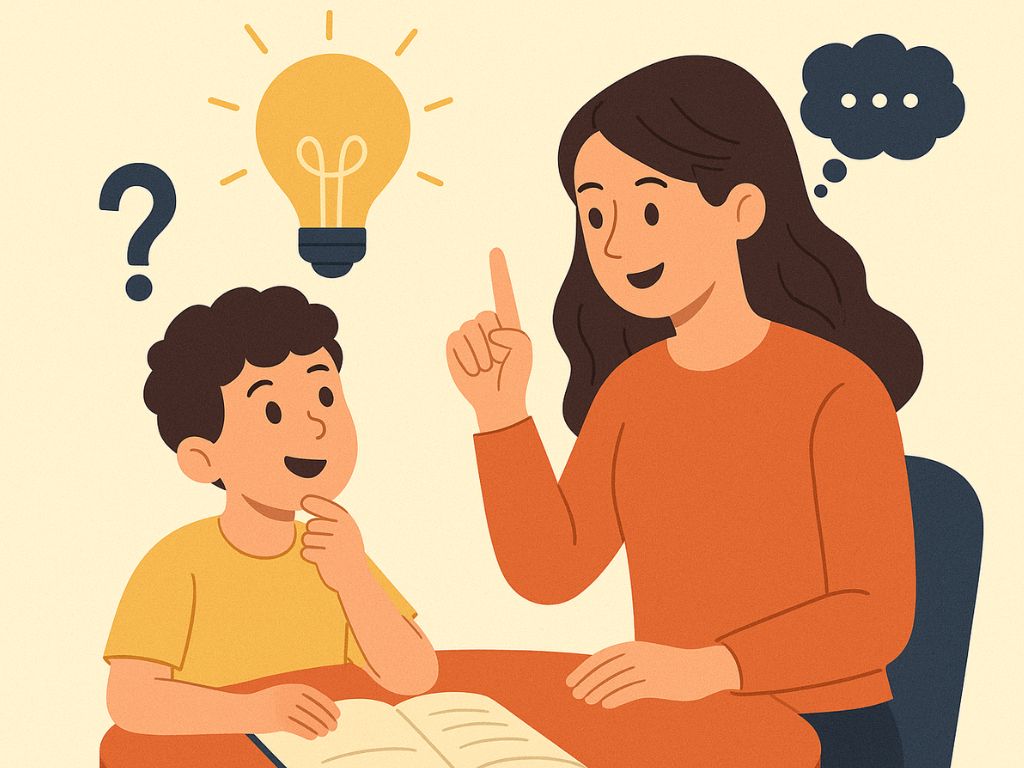

Schools are expected to prepare students for examinations, but education should go beyond helping learners remember information long enough to pass a test. Students also need to know how to think, question ideas, make decisions and reach conclusions for themselves. These abilities become increasingly important as they move into higher education, employment and adult life.
Independent thinking in students does not mean encouraging them to reject everything they are taught. Instead, it means helping them develop the confidence and reasoning skills to examine information, ask meaningful questions, consider different perspectives and form conclusions based on evidence. In a world where students have access to an enormous amount of information online, this ability has become even more important.
However, many classrooms still place greater emphasis on memorisation and reproducing expected answers than on questioning, analysis and creativity. Schools can change this by creating learning environments where students are given opportunities to think for themselves rather than simply repeat what they have been told.
1. Encourage students to ask questions
One of the simplest ways to develop independent thinking is to make students feel comfortable asking questions. When learners are encouraged to ask “why”, “how” and “what if”, they begin to look beyond the information presented to them.
Teachers should therefore avoid creating classrooms where questioning is seen as disrespectful or disruptive. A student’s question may reveal curiosity, confusion or a different way of looking at a topic. Even when the question does not have an immediate answer, it can create an opportunity for deeper discussion.
Students who regularly ask questions also become more aware that learning is not simply about receiving information. It involves investigating and trying to understand how different ideas connect.
2. Give students problems to solve
Independent thinking becomes stronger when students have to work out solutions rather than simply receive them. Problem-solving activities can require learners to analyse information, identify possible approaches and decide which solution makes the most sense.
For example, instead of giving students a formula and asking them to repeat it, a teacher can present a real-life problem and ask students to determine how they would solve it. Different students may arrive at different approaches, creating an opportunity to compare their reasoning.
This approach can make learning more engaging while also developing decision-making, analytical thinking and problem-solving skills.
3. Allow different answers
Not every meaningful classroom question needs to have only one acceptable response. In subjects such as literature, social sciences, history and even science, students may sometimes reach different conclusions depending on the evidence and reasoning they use.
Teachers can encourage independent thinking by asking students to explain why they reached a particular answer rather than focusing only on whether their response matches a model answer.
This does not mean that schools should treat incorrect information as correct. Instead, students should learn to support their views with evidence and accept correction when their reasoning is weak. The ability to explain and defend an idea is often more valuable than simply memorising it.
4. Teach students to question information
Students today can access information almost instantly. However, having access to information does not mean that all the information they encounter is accurate.
Social media, websites, videos and artificial intelligence tools can expose students to both reliable and unreliable claims. Schools therefore have an important role in teaching learners how to evaluate what they see and read.
Students should learn to consider where information came from, whether evidence supports the claim and whether other reliable sources agree with it. They should also understand that a confident presentation does not automatically make information true.
Developing these habits can help students become more careful thinkers rather than simply accepting the first answer they find online.
5. Make classroom discussions more meaningful
Classroom discussions can provide students with opportunities to hear different perspectives and develop their own ideas. However, discussion becomes less useful when only a few confident students participate.
Teachers can create structured discussions in which students are given time to think before responding. They can also encourage learners to explain their opinions, respond respectfully to opposing views and reconsider their positions when presented with convincing evidence.
This teaches students that changing their minds is not necessarily a sign of weakness. Sometimes, being willing to reconsider an opinion is evidence of good thinking. A classroom where students can disagree respectfully can therefore become an important space for developing independent judgement.
Read also:
10 ways teachers can build creativity in children from a young age
Grading intelligence: Are Nigerian schools rewarding memorisation over thinking
6. Reduce overdependence on model answers
Model answers can be useful, particularly when students are learning how to structure certain types of academic work. However, relying too heavily on them can discourage independent thought.
If students are trained to reproduce the exact wording or approach expected by a teacher, they may become uncomfortable when faced with unfamiliar questions.
Teachers can instead provide guidance while allowing students to develop their own approaches. After students complete a task, the class can compare different methods and discuss their strengths and weaknesses. This helps learners understand that there may be several reasonable ways to approach a problem.
7. Give students choices
Giving students some control over their learning can encourage them to become more responsible and independent. This does not mean allowing students to decide everything about their education.
Teachers can provide limited choices within an assignment. For example, students might be allowed to choose a topic for a project, select how they present their findings or decide which question they want to investigate further.
Making decisions requires students to consider their interests, strengths, available resources and the requirements of the task. Over time, these small choices can help learners develop confidence in making decisions without constantly waiting for someone else to tell them what to do.
8. Use real-life examples
Students are more likely to think independently when they can connect classroom knowledge to situations outside school. Real-life problems can force learners to consider how theories, facts and concepts apply in practice.
A business studies teacher, for example, could ask students how they would respond if a small business suddenly lost most of its customers. A science teacher could discuss how a community might respond to a local environmental problem.
Such activities require students to use knowledge rather than simply recall it. They also show learners that education is not limited to examination questions. When students understand why knowledge matters in everyday life, they are more likely to engage with it critically.
9. Let students learn from mistakes
Students cannot develop independent thinking if they are terrified of getting things wrong. Fear of mistakes can encourage learners to wait for teachers or classmates to provide the “safe” answer.
Schools can change this by treating mistakes as opportunities to examine reasoning. When an answer is incorrect, teachers can ask students where their thinking went wrong and what they might do differently. This approach helps learners understand that failure does not have to end the learning process.
In addition, students who are allowed to make manageable mistakes can become more willing to experiment with different approaches. That confidence is important because independent thinking often involves uncertainty.
10. Encourage research and independent projects
Independent projects give students an opportunity to take ownership of a question or topic. Rather than receiving every piece of information from the teacher, learners have to identify what they need to know, search for relevant sources, evaluate information and organise their findings.
The project does not have to be complicated. It could involve investigating a local environmental issue, interviewing people about a community concern, researching a historical event or developing a solution to a practical problem. The important thing is that students have to make decisions throughout the process.
These experiences can help develop research skills, initiative, creativity and confidence. They also prepare students for higher education, where independent learning becomes increasingly important.
Independent thinking is not only an academic skill. It affects how young people approach decisions, relationships, work and everyday problems.
A student who has learned to examine evidence may be less likely to accept every claim they encounter online. A learner who has practised considering different perspectives may be better prepared to engage in constructive disagreement. Someone who has developed problem-solving skills may be more confident when faced with unfamiliar situations.
This is particularly relevant in today’s rapidly changing world. Technology is making information easier to access and automating some tasks that previously required human effort. As a result, the ability to interpret information, make sound judgements, solve unfamiliar problems and think critically is becoming increasingly valuable.
The World Economic Forum has repeatedly identified analytical thinking, creative thinking and other cognitive abilities among important skills for the changing world of work. This reinforces the need for schools to prepare students for more than examinations.
However, independent thinking should not be confused with simply encouraging students to have strong opinions. A student can be very opinionated without being a strong independent thinker.
Good independent thinking involves evidence, reasoning and a willingness to reconsider a position when better evidence becomes available.
Schools therefore need to create environments where students can think freely while still understanding the importance of facts, evidence, accuracy and intellectual responsibility.
Teachers remain extremely important even in classrooms that encourage greater independence. The goal is not to remove teachers from the learning process but to change their role from being the only source of answers to becoming guides who help students discover, question and evaluate information.
A teacher can respond to a student’s question with another question that encourages deeper thought. Instead of immediately correcting a student’s approach, the teacher can ask the learner to explain their reasoning and identify where they may have gone wrong.
This does not mean every lesson needs to become a debate or that students should be left to teach themselves. Young learners still require instruction, structure and guidance. Independent thinking develops best when students have both the knowledge they need and the opportunity to use that knowledge independently.
The balance is important. Students need teachers who can provide reliable information while also encouraging them to investigate, question and apply what they have learnt.
Schools have an important responsibility to prepare students for a world in which knowing information is no longer enough. Learners must also know how to evaluate information, solve problems, make decisions, question assumptions and form reasonable conclusions.
Encouraging students to ask questions, solve problems, evaluate information, participate in meaningful discussions, make choices and learn from mistakes can gradually develop these abilities. In addition, independent projects and real-life learning experiences can help students understand how their knowledge can be applied beyond the classroom.
The purpose of independent thinking is not to make students challenge every teacher or reject established knowledge. It is to help them become thoughtful learners who can examine ideas rather than simply accept them.
When schools give students room to think, they do more than improve academic learning. They help young people develop the confidence and judgement they will need long after they leave the classroom.