
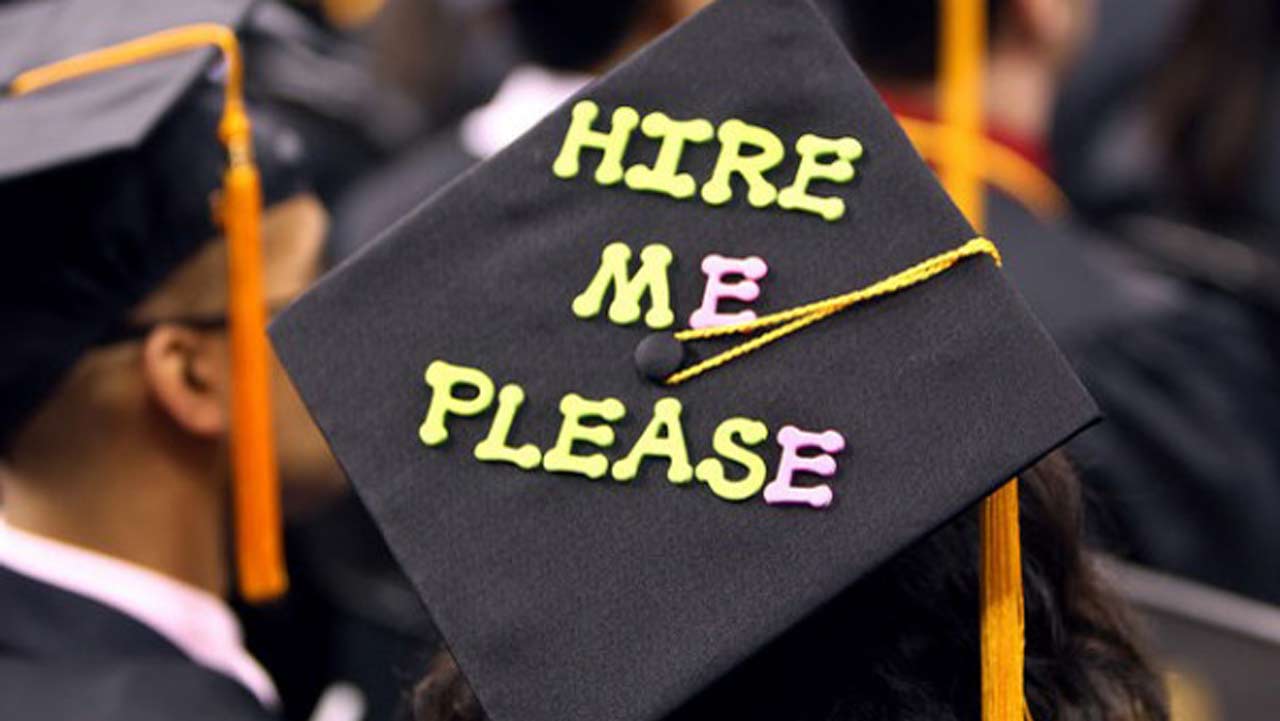

Graduating from university is often presented as the moment when education ends and working life begins. In reality, graduation is only the beginning of another form of learning. The workplace operates by rules that are sometimes very different from those of the classroom, and many graduates discover this only after securing their first job.
A degree remains valuable, but having a degree alone does not automatically prepare someone for everything an employer expects. The modern workplace increasingly rewards people who can communicate, solve problems, work with others, adapt to technology and continue learning when their original knowledge is no longer enough.
The workplace is also changing quickly. The World Economic Forum’s Future of Jobs Report 2025, based on the views of more than 1,000 employers representing over 14 million workers across 55 economies, estimates that 39 per cent of workers’ existing skill sets could be transformed or become outdated between 2025 and 2030. It also identifies analytical thinking, resilience, flexibility, creative thinking and technological literacy among the skills employers increasingly value.
For graduates entering this environment, understanding how work actually functions can be just as important as getting the first job. These are some of the realities every graduate should understand before stepping into the modern workplace.
1. Your Degree Gets You Started, Not Finished
A university degree can help a graduate qualify for opportunities, but it is not a guarantee of long-term career success. Once employed, what matters increasingly is what the graduate can actually contribute to the organisation.
An employer may be interested in the course a graduate studied, but they will also want to know whether that person can communicate clearly, meet deadlines, solve problems, work with colleagues and learn new responsibilities. In some industries, graduates may also be required to demonstrate specific technical abilities through tests, portfolios, projects or practical experience.
The World Economic Forum reports that work experience remains the most common mechanism employers expect to use when assessing candidates, with 81 per cent of surveyed businesses saying they expect to rely on it between 2025 and 2030. Skills assessments are also expected to be used by 48 per cent of employers.
This means graduates should not stop developing themselves simply because they have received their certificates. The degree opens the door; performance, skills and professional behaviour help determine what happens after entering.
2. You Have to Keep Learning
One of the biggest differences between university and the modern workplace is the speed at which knowledge changes. A graduate may leave school with relevant knowledge only to discover that the tools, systems or processes used in their industry have changed within a few years.
Continuous learning is therefore becoming part of professional life rather than something reserved for students. Graduates may need to take short courses, attend professional training, learn new software, follow developments in their industries or develop skills outside their original academic discipline.
The World Economic Forum identifies curiosity and lifelong learning among the skills expected to rise in importance through 2030. It also estimates that 59 out of every 100 workers will require training by 2030 as workplace skills evolve.
For a graduate, this means being willing to say, “I do not know this yet,” and then taking responsibility for learning it. In the modern workplace, refusing to learn can become a bigger disadvantage than not knowing something in the first place.
3. Communication Can Make or Break Your Career
A graduate can be technically brilliant and still struggle professionally if they cannot communicate effectively. Workplace communication goes beyond speaking good English or writing grammatically correct emails. It involves knowing what to say, how to say it, when to say it and who needs the information.
Employees communicate with managers, colleagues, customers, clients and other stakeholders who may have different expectations and levels of understanding. A good professional therefore learns to explain ideas clearly, listen carefully, ask relevant questions and avoid unnecessary confusion.
Communication also includes everyday habits. Responding to important messages, acknowledging instructions, reporting delays early and providing clear updates can make a significant difference to how colleagues experience working with someone.
This is particularly important for graduates who may be joining a workplace where nobody knows them yet. Professional communication helps others understand not only what they know but also how reliably they can work with other people.
4. Your Attitude Towards Feedback Matters
Many graduates are accustomed to receiving grades from lecturers, but workplace feedback can feel very different. A manager may point out weaknesses in a report, explain why a task was poorly handled or ask an employee to change their approach.
The first reaction should not automatically be defensiveness. Feedback is one of the ways employees learn what their organisation expects from them. Even when feedback is difficult to hear, a graduate can benefit by separating the message from the emotion surrounding it, identifying what needs to change and applying the lesson to future work.
This does not mean accepting every criticism without question. Employees can ask for clarification when feedback is unclear or raise concerns when something appears unfair. However, consistently rejecting constructive feedback can make professional growth much harder.
A graduate who learns to receive feedback, reflect on it and improve will usually have more opportunities to develop than one who treats every correction as a personal attack.
5. Technology Is Part of Almost Every Career
Technology is no longer restricted to people working in information technology. Teachers use digital learning platforms, journalists use content management systems and artificial intelligence tools, accountants work with financial software, marketers analyse digital data, while administrative workers rely on collaboration and communication platforms.
The World Economic Forum’s 2025 report identifies AI and big data, networks and cybersecurity, and technological literacy among the fastest-growing skill areas. It also reports that 60 per cent of employers expect broader digital access to transform their businesses by 2030.
Graduates therefore need more than basic computer literacy. They should understand the digital tools relevant to their profession and be willing to learn new ones as they emerge.
At the same time, technology should not replace professional judgement. Artificial intelligence can help with research, drafting, analysis and routine tasks, but employees still need to check information, protect confidential data and understand when human judgement is necessary.
The graduate who learns how to work effectively with technology without becoming completely dependent on it will be better prepared for an increasingly digital workplace.
6. Being Reliable Is a Professional Skill
Some graduates focus heavily on impressive qualifications and overlook one of the simplest qualities employers value: reliability.
A reliable employee does what they have agreed to do, meets deadlines, communicates when a problem arises and does not need to be reminded constantly about basic responsibilities. This may sound ordinary, but these behaviours influence how much responsibility managers are willing to give someone.
Reliability is also about consistency. Producing excellent work once does not compensate indefinitely for regularly missing deadlines or failing to communicate.
In the workplace, trust is built gradually. When colleagues know that a graduate can be depended upon, they are more likely to involve that person in important assignments and responsibilities.
A career is therefore not built only through major achievements. It is also built through the ordinary things an employee does consistently when nobody is celebrating them.
Read also:
Beyond Engineering and Medicine: The university degrees that could give graduates an edge in 2026
Why students remember how teachers made them feel
7. Working With People Is Part of the Job
University assignments can sometimes be completed individually, but most workplaces require collaboration. Graduates will have to work with people who think differently, communicate differently and may have different priorities.
Teamwork does not mean agreeing with everyone. It means knowing how to contribute without making every disagreement personal. A professional should be able to express an opposing view, listen to another perspective and work towards a solution that serves the organisation’s objective.
The World Economic Forum continues to place resilience, flexibility, leadership and social influence alongside analytical and creative skills among important workplace capabilities.
This matters because organisations rarely succeed through individual brilliance alone. Projects require people from different departments and areas of expertise to coordinate their efforts. For graduates, learning how to collaborate is therefore not an optional “soft skill”. It is part of learning how work actually gets done.
8. You May Not Get Your Dream Job Immediately
Graduates sometimes enter the labour market expecting their first job to perfectly match their degree, interests, salary expectations and long-term ambitions. That can happen, but it is not guaranteed.
The first job may instead provide an opportunity to gain experience, understand an industry, develop professional relationships and discover what type of work suits them. A graduate who approaches an early role only as a temporary inconvenience may overlook valuable opportunities to build transferable skills.
This does not mean accepting every job indefinitely or abandoning career ambitions. It means understanding that careers are often built through stages rather than through one perfect opportunity.
A graduate might begin in an entry-level administrative role and later move into operations, project management, human resources, communications or another area after discovering new interests and building relevant skills.
The important thing is to keep learning from each stage rather than believing that a first job permanently determines the rest of a career.
9. Professional Relationships Matter
Getting a job is not the only reason to build professional relationships. Graduates should understand that careers develop within networks of people who share information, opportunities, recommendations, expertise and experience.
This does not mean pretending to be friendly with everyone for personal advantage. Genuine professional relationships are built through respect, competence, helpfulness and consistent interaction.
A former colleague may become a future manager. A supervisor may recommend someone for another opportunity. A person met at a professional event may later share information about an opening or introduce a graduate to someone working in their desired field.
Networking therefore should not begin only when someone urgently needs employment.
Graduates should also learn to maintain relationships after internships, industrial training, graduate programmes and previous jobs. A short message to check in, sharing a useful professional resource or congratulating someone on an achievement can help maintain a relationship naturally.
The modern workplace is connected, and professional opportunities often move through people as well as formal recruitment channels.
10. Adaptability May Matter More Than Having All the Answers
Perhaps the most important lesson for graduates entering the modern workplace is that nobody can know everything.
Industries change. Organisations restructure. New technologies appear. Job descriptions evolve. Employees may be asked to take on responsibilities they did not expect when they were hired.
The ability to adapt therefore becomes increasingly important.
The World Economic Forum’s 2025 research identifies resilience, flexibility and agility as core skills for today’s workforce and among those expected to become increasingly important. It also notes that nearly 40 per cent of workers’ existing skill sets are expected to be transformed or become outdated by 2030.
For graduates, adaptability means being able to learn a new system, adjust to a new manager, work with a different team, respond to changing priorities and remain productive when circumstances do not go exactly as planned.
It also means understanding that career development is rarely a straight line. A person may change industries, acquire new qualifications, move into management, start a business or discover an entirely different professional interest.
The modern workplace rewards people who can respond intelligently to change rather than simply complain that things are no longer the way they were.
Graduation marks an important achievement, but it does not provide a complete guide to working life. The modern workplace requires graduates to combine academic knowledge with communication, reliability, digital literacy, teamwork, adaptability and a willingness to keep learning.
Technology is changing how organisations operate, while employers are placing increasing attention on skills that can be applied in real working situations. The World Economic Forum’s research shows that employers expect significant changes in the skills required over the next few years, while the OECD has also highlighted the growing importance of aligning workers’ skills with changing labour-market needs.
For graduates, the lesson is not that university education has become less important. Rather, education is the foundation on which professional development continues to build.
The workplace will teach lessons that no lecture hall can completely provide. Some will involve dealing with difficult colleagues, meeting demanding deadlines, receiving criticism, solving unfamiliar problems and learning technologies that did not exist when a graduate was at university.
The graduates who understand this early are more likely to approach their careers with realistic expectations. They will know that being employable is not simply about possessing a certificate, but about continuously demonstrating value, learning from experience and remaining useful as the world of work changes.