
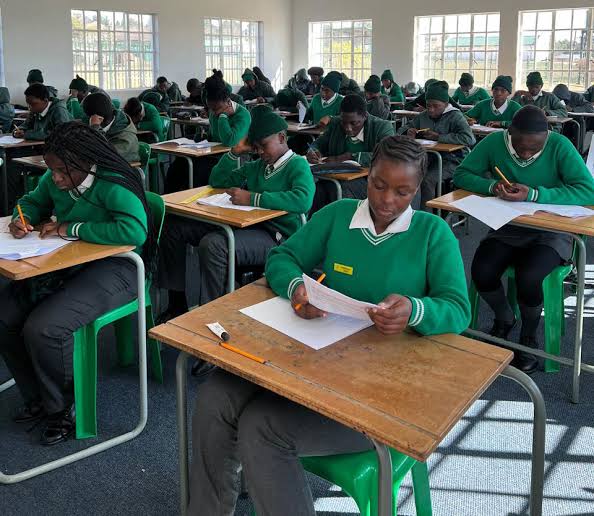

Education does not begin and end when a child walks into a classroom. Some of the most important lessons children learn are acquired at home, on the playground, while interacting with friends, through family responsibilities and even during ordinary moments of everyday life.
A child may learn mathematics, science, English and other subjects at school, but many of the skills needed to use that knowledge effectively are developed outside formal lessons. Learning to share a toy, solve an argument with a friend, help with household tasks, care for a younger sibling, make a simple decision or cope with losing a game can all contribute to a child’s development.
This is why childhood experiences outside school deserve greater attention. UNICEF notes that play can help children develop physical, cognitive, social and emotional skills, while also strengthening creativity, problem-solving, communication and resilience.
For parents and caregivers, this means everyday life can become an important learning environment. Children do not always need a textbook or a formal lesson to develop useful abilities. Sometimes, they need the opportunity to explore, participate, make mistakes, interact with others and gradually become more independent. Here are 10 important skills children can learn outside the classroom.
1. Communication skills
Children develop communication skills through everyday conversations long before they fully understand the concept of communication. Talking with parents, grandparents, siblings, neighbours and friends teaches them how to express their thoughts, ask questions, listen to others and respond appropriately.
Simple activities such as telling a parent about their day, explaining why they are upset or negotiating the rules of a game can strengthen their ability to communicate. Storytelling, singing and conversations at home can also expand vocabulary and improve a child’s confidence in expressing ideas.
These experiences matter because communication is not simply about speaking correctly. Children also need to learn how to listen, understand different viewpoints and communicate respectfully.
2. Problem-solving
Children encounter small problems almost every day. A toy breaks, two friends want the same object, a game does not go as planned or they cannot figure out how to build something.
When adults do not immediately solve every problem for them, children have an opportunity to think through possible solutions. They may try something, fail, change their approach and try again.
Play is particularly useful for developing this ability. UNICEF explains that playful activities allow children to explore, make choices, tackle challenges and develop problem-solving and flexible-thinking skills.
Allowing children to experience manageable problems, therefore, can teach them an important lesson: not every difficulty requires an adult to provide the answer.
3. Cooperation
Children learn cooperation by doing things with other people. Playing football with friends, helping a sibling, participating in a family activity or building something together requires them to consider what other people want.
They learn that they cannot always have their way and that achieving a shared goal may require patience, compromise and teamwork. A child who wants to continue playing may have to accept that another child needs a turn.
These ordinary experiences gradually prepare children for situations where cooperation will be necessary at school, at work and in wider society. Play can be particularly valuable because children naturally practise taking turns, negotiating and working towards shared goals while having fun.
4. Emotional regulation
Children experience strong emotions, including excitement, disappointment, anger, jealousy and frustration. Outside the classroom, they have countless opportunities to learn how to deal with these feelings.
Losing a game can teach a child how to handle disappointment. Waiting for something they want can teach patience. Resolving an argument with a sibling can help them understand anger and forgiveness.
This does not mean children should be expected to control every emotion perfectly. Rather, they need safe opportunities to recognise what they are feeling and gradually learn appropriate ways to respond. UNICEF describes play as an important space where children can experience emotions and practise managing them.
5. Independence
Children become more independent when they are allowed to do appropriate things for themselves. Simple responsibilities such as arranging their belongings, choosing between suitable options, helping to prepare a meal or completing a household task can build confidence.
Independence does not mean leaving children without guidance. It means allowing them to take increasing responsibility as they grow. When children are trusted to perform age-appropriate tasks, they begin to understand that they are capable of contributing and making decisions.
Free play can also encourage independence because children are able to choose what to do, explore their interests and work out solutions without constant adult direction.
6. Creativity
Creativity is not limited to drawing, painting or other artistic activities. Children demonstrate creativity when they invent games, create stories, build objects from available materials or find unusual ways to solve everyday problems.
A child playing with cardboard boxes may turn them into a house, car or shop. Another may invent an imaginary character and create an entire story around it. These activities encourage children to use their imagination rather than simply reproduce something they have been shown.
Unstructured play is particularly valuable because children have greater freedom to make choices and experiment. UNICEF identifies imagination and creativity as important abilities that children can develop through play and everyday exploration.
Read also:
Gamification: Enhancing classroom learning through play
10 things AI cannot do for students: The skills technology cannot replace
7. Decision-making
Children make decisions constantly, although adults may not always recognise these moments as learning opportunities. Choosing which game to play, deciding how to spend free time or determining how to complete a simple task can help children practise making choices.
As they grow older, these decisions can become more meaningful. Children may have to decide how to divide their time between play and responsibilities, which activity to join or how to respond when friends encourage them to do something inappropriate.
Parents can support this development by giving children reasonable choices instead of making every decision for them. Learning to consider options and consequences is an important foundation for responsible decision-making later in life. UNICEF also identifies decision-making as one of the transferable skills children and young people need beyond formal education.
8. Empathy and respect
Children do not learn empathy only from a textbook definition. They develop it through relationships and experiences with other people.
When a child notices that a friend is sad, comforts a sibling who is hurt or learns to consider another person’s feelings during an argument, they are beginning to understand empathy. Family conversations can also help children recognise that people may have different opinions, needs and experiences.
Everyday interactions can therefore teach children that their actions affect other people. Over time, this understanding can develop into respect, kindness and greater awareness of others.
These are important social skills because children eventually have to function in communities where people have different backgrounds, personalities and perspectives. UNICEF includes empathy and respect for diversity among important transferable skills for living and participating effectively with others.
9. Resilience
Children learn resilience when they experience manageable disappointment and discover that they can recover from it. A child may lose a competition, make a mistake while learning something new or fail to achieve an immediate goal.
If adults protect children from every disappointment, they may have fewer opportunities to practise coping with setbacks. On the other hand, providing support while allowing children to try again can help them understand that failure does not necessarily mean the end of an effort.
Games and sports can be particularly useful in this regard because children experience both winning and losing. They learn that success may require repeated attempts and that disappointment can be followed by another opportunity.
UNICEF describes play as an important setting for developing resilience, confidence and coping mechanisms, particularly as children navigate challenges and relationships.
10. Responsibility
Responsibility is often developed through ordinary family and community experiences. A child who is expected to put away toys, care for personal belongings, feed a pet or help with an age-appropriate household task is learning that actions come with obligations.
Such responsibilities should be appropriate for the child’s age and ability. They are not meant to turn childhood into work, but to help children understand that they have a role to play in their family and community.
Responsibility also grows when children are allowed to experience reasonable consequences. If a child repeatedly forgets where they put their belongings, for example, helping them understand the consequences can teach organisation and accountability better than simply replacing everything they lose.
These lessons may appear small, but they can gradually shape how children approach commitments as they grow older.
The classroom remains essential to a child’s education, but it cannot provide every experience a child needs. Formal education can provide structured knowledge and academic skills, while everyday experiences give children opportunities to practise using those skills in real situations.
A child can learn about cooperation in a lesson, for example, but working with siblings or friends provides an opportunity to practise it. A teacher can explain problem-solving, but figuring out how to fix a broken toy or settle a disagreement gives the child a real problem to solve.
This is why play, family interaction, outdoor activities, responsibilities and relationships should not be treated as distractions from education. They are part of how children understand the world.
Recent UNICEF evidence continues to emphasise that play supports children’s cognitive, physical, social and emotional development, while also helping them develop creativity, collaboration, problem-solving and other transferable abilities.
Parents therefore do not need to turn every moment at home into a formal lesson. In many cases, the better approach is to create a safe environment where children can explore, ask questions, interact with others, make age-appropriate choices, experience manageable challenges and learn from their mistakes.
The most valuable education a child receives may not always happen at a desk. Sometimes it happens while playing with friends, helping at home, settling an argument, making a mistake or trying something for the first time.
School teaches children many important things, but life also teaches. The goal should not be to choose between the two. Instead, children need both: the structured knowledge they gain in the classroom and the practical skills they develop through everyday experiences.