
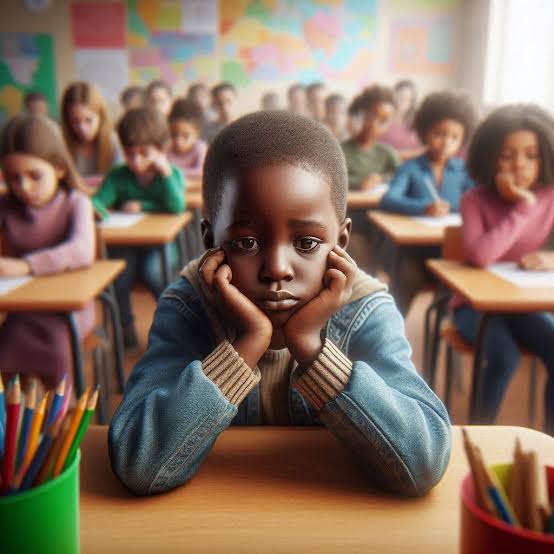

Failure is one of the experiences students spend a great deal of time trying to avoid. A low examination score, a rejected application, a failed course, an unfinished project or a missed opportunity can feel like proof that something has gone seriously wrong. In environments where academic achievement is closely associated with intelligence and future success, failure can be particularly difficult to accept.
However, failure is also part of learning. Students who never experience setbacks may have fewer opportunities to understand how to respond when things do not go according to plan. The important question is not whether a student will fail at something, but what they learn from the experience and how they respond afterwards.
This does not mean every failure is automatically beneficial. A student can fail an examination, become discouraged and repeat exactly the same mistakes. Failure becomes meaningful when students are able to reflect on what happened, identify what they can change and make another attempt with better understanding.
Research on learning and motivation has repeatedly highlighted the importance of how students interpret setbacks. Studies of academic self-efficacy, for example, show that students’ beliefs about their ability to handle challenges can influence their motivation, persistence and academic behaviour.
For many students, some of the most valuable lessons about failure only become clear after several difficult experiences. Here are 10 lessons they often learn later than they should.
1. Failure does not mean you are a failure
One poor result can easily become a judgement about a student’s entire identity. A student who fails mathematics may start saying, “I am bad at mathematics.” Someone who is rejected from a university or scholarship opportunity may conclude that they are simply not good enough.
The result and the person, however, are not the same thing. Failing a test means that the student did not achieve the expected result on that particular assessment. It does not provide a complete measurement of their intelligence, character or potential.
Understanding this distinction allows students to examine a disappointing outcome without turning it into a permanent label. They can ask what went wrong and what needs to change rather than simply deciding that they are incapable.
2. Failure can show you what uou meed to improve
Students sometimes treat failure as a final verdict when it can actually provide useful information. A poor result may reveal weak preparation, poor time management, misunderstanding of a topic or an ineffective study method.
For example, a student who repeatedly reads notes but struggles to answer questions independently may discover that familiarity with a topic is not the same as being able to recall and apply it.
This does not make failure pleasant, but it can make it informative. Instead of asking only, “Why did I fail?”, students can also ask, “What is this result showing me about the way I prepared?”
3. Working hard is not always enough
One of the more uncomfortable lessons about failure is that effort and effectiveness are not always the same thing.
A student may spend six hours studying and still perform poorly because the time was spent using an ineffective method, studying without breaks, concentrating on material they already knew or leaving difficult areas untouched. Working hard matters, but students also need to understand how to use their effort effectively.
Research on learning techniques has found strong evidence for approaches such as practice testing and distributed practice, while some commonly used methods, such as simply rereading material, may be less effective when used on their own.
Failure can therefore encourage students to examine not just how much effort they put in, but whether that effort was directed towards the right things.
4. Asking for help is part of learning
Some students believe that asking for help means admitting that they are not intelligent enough. As a result, they may struggle silently until a poor result makes the problem impossible to ignore.
Failure can teach them that seeking help early is often more productive than waiting until a situation becomes overwhelming. A teacher may clarify a difficult concept, a classmate may explain a different approach and a parent may help a student develop a better routine.
Independent learning does not mean solving every problem alone. Knowing when to seek guidance is itself an important learning skill.
The OECD’s PISA research has highlighted the importance of students’ proactive learning behaviours, including asking questions when they do not understand and seeking additional information when necessary.
5. Comparing yourself with others can hide your progress
Failure often becomes more painful when students immediately compare themselves with classmates who performed better.
A student may receive a score that represents significant improvement but feel unsuccessful because another student scored higher. Over time, constant comparison can make students focus more on other people’s results than on their own development.
Failure can teach students to measure progress more thoughtfully. The important question is not always, “Did I do as well as someone else?” It may be, “Do I understand more than I did before, and what can I improve next?”
Every student has a different starting point, set of challenges and pace of development. Learning to recognise personal progress does not mean ignoring high standards; it means using those standards without allowing comparison to become the only measure of success.
6. Some opportunities require more than one attempt
Students often assume that important opportunities are one-time events. If they are rejected for a scholarship, fail an entrance examination or miss an internship opportunity, they may believe the door has permanently closed.
Life rarely works that neatly. There are situations in which a particular opportunity genuinely cannot be repeated. However, one unsuccessful attempt does not necessarily mean that similar opportunities will never appear again. A rejection can reveal gaps that can be addressed before the next application.
The first attempt may also provide experience that the student did not have before. They may learn how to prepare better, communicate their strengths more clearly or avoid mistakes they made previously. Failure can therefore be a painful teacher, but it can also make a second attempt more informed.
Read also:
Why many students fail English Language as a Subject: 10 common reasons
Why brilliant secondary school students struggle in the University
7. Perfectionism can make failure harder to handle
Some high-achieving students struggle with failure precisely because they are accustomed to performing well. When they make a mistake, they may feel that their entire reputation has been damaged.
This can create perfectionism, where students become so afraid of getting something wrong that they avoid challenging tasks altogether. A student may choose an easier project because they are more confident of getting a high mark rather than attempting something difficult that could teach them more.
Learning involves uncertainty. Students will encounter questions they cannot answer immediately and subjects that require several attempts before they become clear.
Accepting that mistakes are part of the learning process can make students more willing to attempt difficult work. The goal is not to lower standards, but to understand that excellence is not the same as never making mistakes.
8. A failed plan does not mean the goal is wrong
Failure can sometimes make students abandon a worthwhile goal too quickly.
A student may want to study a particular course but perform poorly in the relevant examination. Another may hope to build a career in a competitive field but struggle to secure an early opportunity. The setback may require a change in strategy, but it does not automatically prove that the original goal was unrealistic.
Students need to learn the difference between changing a goal and changing the route to that goal.
Sometimes the best response to failure is to try again. Sometimes it is to acquire additional skills, seek better guidance, change a method or take a different route towards the same objective. The ability to adjust without immediately giving up is an important part of resilience.
9. What happens after failure matters
The failure itself is only one part of the story. What happens afterwards can determine whether the experience becomes a lesson or simply a painful memory.
Two students can receive the same disappointing result and respond differently. One may avoid the subject, blame everyone else and repeat the same approach. The other may examine the result, ask questions, change their preparation and try again.
This does not mean students should be expected to recover immediately from every disappointment. Failure can hurt, and students need time to process difficult experiences.
However, reflection eventually needs to become part of the process. Students should be encouraged to look at what happened without excessive self-blame and identify what is within their control.
That shift from “I failed, so I am incapable” to “I failed, so I need to understand what happened” can change how a student approaches future challenges.
10. Failure is not the opposite of success
Perhaps the most important lesson students learn too late is that failure and success are not always opposites.
A student’s education is rarely a straight line from one achievement to another. There may be poor grades, rejected applications, difficult subjects, unsuccessful projects and unexpected changes along the way.
Success does not require a person to avoid every setback. What matters is the ability to learn, adapt and continue making informed decisions.
This is particularly important in a rapidly changing world. The World Economic Forum’s Future of Jobs Report 2025 found that employers expect significant changes in the skills required by workers by 2030, with analytical thinking remaining among the most important core skills and resilience, flexibility and agility also identified as increasingly important.
These qualities are not developed simply by succeeding every time. Students need opportunities to confront difficulty, reconsider their approaches and learn from experiences that do not produce the result they wanted.
Schools and families have an important role to play in helping students develop a healthier relationship with failure. If every low mark is treated as a crisis or every mistake attracts harsh criticism, students may learn to hide failure rather than learn from it.
A better environment allows students to discuss mistakes without being humiliated. Teachers can help students understand where they went wrong and what they can do differently. Parents can focus conversations not only on the result but also on preparation, effort, strategy and improvement.
Students, meanwhile, need to understand that learning from failure does not mean pretending that poor performance does not matter. A failed examination may have real consequences. A rejected application may mean losing an opportunity. A missed deadline may create genuine problems. Taking failure seriously is different from allowing it to define one’s identity.
There is also a difference between resilience and simply telling students to keep trying indefinitely. Sometimes reflection should lead to persistence, while at other times it should lead to a change in strategy or direction. Learning from failure means becoming better at deciding what to do next.
Ultimately, students do not need an education that promises them a life without failure. Such a promise would be impossible to keep. They need an education that prepares them to respond intelligently when things go wrong.
Failure can teach a student to prepare differently, ask for help, manage expectations, reconsider strategies and recognise progress. It can reveal weaknesses that success might have hidden and encourage a level of self-awareness that cannot be developed through grades alone.
The student who learns this early is not necessarily the one who never fails. It is the one who can look at a setback honestly, separate the result from their identity, learn what the experience is showing them and decide what to do next. That is one of the most valuable lessons education can offer.